
Development Trends of Pet Food Industry
The pet food industry is a rapidly growing and dynamic field worldwide, driven by various factors including humanization of pets, increased consumer health awareness, technological advancements, and channel changes. The following are the main development trends of the pet food industry in the current and future period:
1. High end and humanized:
- ‘Hairy children’ are family members: the trend of pets being seen as family members is increasing, and owners are willing to spend more to provide them with a high-quality life, including better food.
- High quality raw materials: Consumer demand for pet food that uses human grade, organic, non GMO, grain free (or high-quality grain), and no artificial additives/preservatives/coloring has surged.
- Functional food: The market for functional pet food targeting specific health needs such as joint health, fur health, weight management, gastrointestinal sensitivity, urinary health, oral health, and emotional relief is rapidly expanding. This includes adding functional ingredients such as probiotics, prebiotics, omega-3 fatty acids, glucosamine, chondroitin sulfate, etc.
- Customization and Personalization: Providing customized nutrition plans (such as customized food and nutritional supplements) based on the breed, age, weight, activity level, health status, and even genetic information of pets has become a new hot topic.
2. Natural, healthy, and clean labels:
- Transparency of ingredients: Consumers are increasingly concerned about ingredient lists, demanding clarity, ease of understanding, and traceable sources. The demand for “clean labels” is on the rise, which refers to additives with simple, natural ingredients and no blurriness.
- The trend of “no additives”: Products claiming to be grain free, gluten free, soy free, corn free, and free of artificial ingredients continue to be popular. Although “grain free” is still controversial in science, its market acceptance is high.
- Pay attention to protein sources: There is a growing emphasis on high-quality animal proteins such as fresh meat and meat powder, as well as interest in new and sustainable proteins such as insect protein, single-cell protein, and plant protein.
3. The rise of wet grains, fresh grains, and frozen/freeze-dried foods:
- Pursuing freshness: Pet owners believe that wet food, refrigerated fresh food, and frozen/freeze-dried food are closer to their pets’ natural diet, fresher, with higher moisture content and better palatability.
- Convenience and Nutritional Retention: Freeze drying technology can provide convenience while preserving nutrition and flavor, leading to significant market growth.
- Raw food feeding: Despite food safety controversies, raw food feeding (including frozen raw meat patties and freeze-dried raw food) still has a loyal following and has driven innovation in related products.
4. Sustainability and ethical consumption:
- Environmentally friendly packaging: Consumers demand more environmentally friendly packaging solutions, such as recyclable materials, biodegradable packaging, reduced plastic use, and lightweight packaging.
- Responsible raw material procurement: Focus on the sustainability of raw materials, such as using MSC certified fish, humanely raised meat, palm oil from non deforested areas, etc.
- Plant based and alternative proteins: Due to environmental, ethical, or pet allergy considerations, plant-based pet food and products that use insect protein, lab grown meat, and other alternative proteins have emerged and attracted specific consumer groups.
- Carbon footprint: Brands are beginning to pay attention to and disclose the carbon footprint of their products, committed to reducing the environmental impact during the production process.

5. E-commerce and direct to consumer:
- Online channel dominance: E-commerce platforms (comprehensive e-commerce, vertical pet e-commerce) have become the fastest growing channels for pet food sales, especially the subscription model (regular automatic delivery) which is very popular.
- The rise of DTC model: Many emerging brands directly sell to consumers by establishing their own official websites and communities, building brand loyalty, obtaining user data, and providing personalized services.
- Omnichannel integration: online purchase, offline (pet store, pet hospital) self pickup or experience; The development of integrated models such as offline QR code scanning and online ordering.
6. Technology Empowerment:
- Intelligent feeder: connected to the APP to achieve remote feeding, timed and quantitative feeding, and monitoring of feeding conditions.
- Personalized recommendation: Utilizing big data and AI algorithms to recommend suitable food based on pet information and owner preferences.
- Digital Health Management: Pet food brands may integrate or connect health monitoring devices (such as smart collars) to provide overall health recommendations based on diet and activity data.
- Supply chain transparency: Technologies such as blockchain are used to track the source of raw materials, ensuring food safety and authenticity.
7. The importance of veterinary nutrition and professional channels:
- Prescription food and veterinary recommendations: Pet health problems (obesity, kidney disease, allergies, etc.) are increasing, and the demand for prescription food and therapeutic food sold through veterinary channels is steadily growing. Consumers are increasingly relying on veterinary professional advice.
- Professional pet retail store: providing more professional product selection, consulting services, and experiences, it is an important sales channel for high-end, natural, and special formula foods.

8. Rapid growth in emerging markets:
- The growing middle class, accelerated urbanization, and popularization of pet culture in regions such as Asia Pacific (especially China), Latin America, and Eastern Europe have driven explosive growth in the pet food market, becoming the main engine of global growth.
9. Pay attention to elderly pets and special needs:
- With the extension of pet lifespan, the food market for elderly pets (such as dogs and cats) with special nutritional needs (such as joint support, easy digestion, and kidney care) continues to expand.
- The demand for refinement in specific varieties, body types, and lifestyles is also increasing.
In summary, the future of the pet food industry is:
- Healthier and more natural: Pursuing high-quality, transparent, and functional ingredients.
- More personalized: Meet the unique needs of individual pets.
- Fresher and more diverse: wet grain, fresh grain, freeze-dried and other forms are popular.
- More sustainable: focus on environmentally friendly packaging and responsible supply chain.
- More convenient and intelligent: E-commerce, subscription, and the popularization of smart devices.
- More professional: The role of veterinarians and professional channels is highlighted.
Industry participants need to closely monitor these trends, continuously innovate, and effectively communicate product values and brand concepts in order to stand out in the increasingly fierce competition.
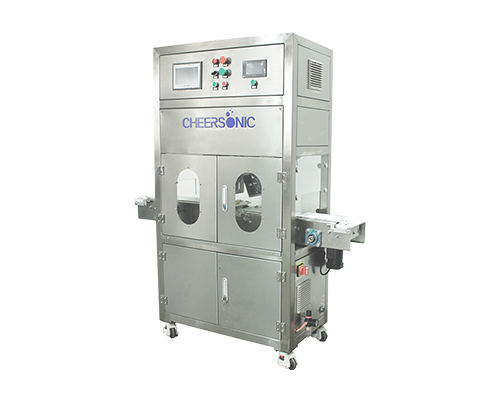
The ultrasonic cutting machine perfectly solves the core problems of deformation, knife sticking, and filling extrusion in pet sausage cutting through its “low pressure, high-frequency vibration” characteristics, and has significant advantages in improving product appearance regularity, production continuity, and hygiene safety. For pet food enterprises that pursue standardized and large-scale production, it is particularly suitable for processing soft, granular or high value-added pet sausage products, which is an ideal choice for cost reduction, efficiency improvement and quality upgrading.
About Cheersonic
Cheersonic manufactures the leading portioning equipment for bakeries producing fresh and frozen desserts. Since 1998 bakers have used Cheersonic machines to cut, slice and portion cheesecake, pie, layer cake, loaves, butter, cheese, pizza, sandwichs, and more. Cheersonic offers ultrasonic cutting solutions that support start-up bakeries and high production commercial facilities alike. Small standalone machines can be used in manual baking facilities and large inline robotic solutions aid in high speed production.
Cheersonic offers many ultrasonic slicing models, both inline and offline applications, with production speeds of 80 to 1,500 cakes or pies per hour.
Cheersonic’ latest offline introductions include ultrasonic cutting with or without divider inserts between each slice. This improves the quality of the cut and makes for a much better product presentation for the customer. In addition, robotic arm improves the speed, efficiency, and accuracy of the cutting process, producing professional looking products every time.
Chinese Website: Cheersonic Provides Professional Ultrasonic Cutting Solutions
