
How to Choose a Dog Teether
Choosing a dog teether requires considering multiple factors such as the dog’s age, body size, oral condition, chewing habits, and product safety in order to select a product that is both suitable for the dog and safe and practical. Here is a detailed purchasing guide:
Select based on the basic characteristics of the dog
1. Age: Match the stage of tooth development
- Puppies (2-6 months teeth replacement period):
Puppies are in the period of tooth replacement, with itchy gums and a tendency to bite. However, their baby teeth are fragile, so it is necessary to choose a soft, easy to chew, and gum friendly grinding rod. Recommend latex materials, rubber toy grinding rods, or specialized puppy milk flavored grinding snacks (such as goat milk chew gum) to avoid damage to baby teeth or gum bleeding caused by hard materials.
Avoid: High hardness bones and nylon grinding rods may cause tooth breakage. - Adult dogs (over 6 months old):
Adult dogs have hard teeth that need to be cleaned with a grinding rod to relieve boredom. They can choose products with moderate hardness based on chewing strength, such as natural rubber or nylon materials, or grinding snacks that also have teeth cleaning functions (such as cowhide chew gum or vegetable fiber sticks). - Elderly dogs (over 7 years old):
Older dogs may have loose and sensitive teeth, so it is necessary to choose grinding rods made of ultra soft materials such as silicone toys and soft meat jerky grinding snacks to avoid damaging teeth or gums with hard products.
2. Body type: Suitable for bite force and swallowing risk
- Small dogs (such as Teddy, Bibear, corgi):
The biting force is weak and it is easy to swallow small foreign objects. Therefore, it is necessary to choose a grinding rod that is small in size, soft in texture, and not easy to break * *, to avoid products that are too large to bite or products that are too small to be swallowed in one bite and cause suffocation. Recommend rubber toys with a diameter of 3-5cm and a length of 10cm or less, or small bite toys. - Medium to large dogs (such as Golden Retriever, Labrador Retriever, German Shepherd):
Strong biting force, it is necessary to choose grinding rods with high hardness, large size, and resistance to biting, such as nylon bone biting, natural deer antlers (without sharp edges), large cowhide rolls, etc., to avoid materials that are too soft and quickly bitten, leading to frequent replacement or swallowing risks.
Key: The length of the molars should be at least 1.5 times the width of the dog’s mouth and nose to avoid swallowing them in one go; The diameter should be larger than the diameter of the dog’s trachea (about 2cm for small dogs and 3-4cm for medium to large dogs).
Pay attention to material safety: reject harmful ingredients
1. Prioritize natural and edible materials
- Natural plant/animal materials:
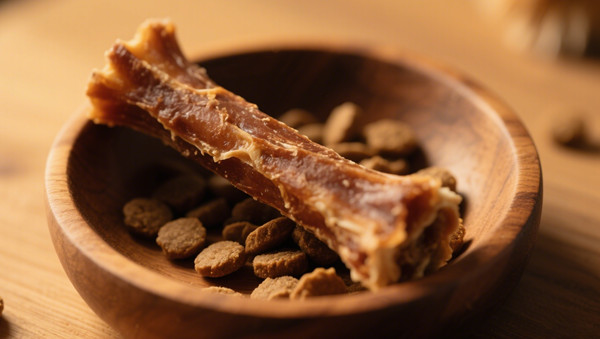
Bite adhesive made from animal skins such as cowhide, pigskin, and sheepskin: It has good toughness, can be digested in small amounts, and is suitable for adult dogs to grind their teeth. However, it is necessary to choose products without added preservatives or pigments to avoid the odor or chemical residue of inferior leather materials.
Vegetable fiber and starch grinding rods: such as dried sweet potatoes and carrot sticks (suitable for dogs with moderate dryness and hardness), suitable for puppies or dogs with sensitive stomachs, high safety, but poor bite resistance, need to be replaced in a timely manner to avoid moisture and deterioration.
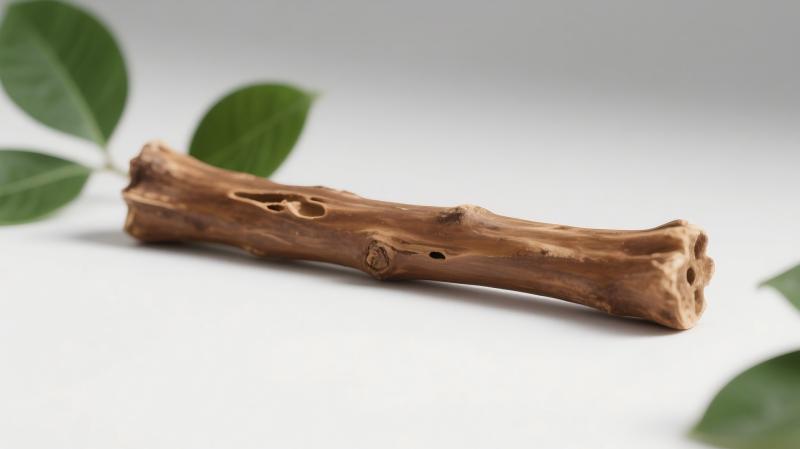
Natural bones/antlers: Choose deer antlers or cow bones (bone marrow free) that have been degreased and polished, with high hardness and are not easily broken, but avoid poultry bones such as chicken and duck bones (which are prone to breaking into sharp fragments and scratching the intestines). - Safe synthetic material:
Food grade rubber/latex: Good elasticity, bite resistance, suitable for interactive grinding toys (such as food balls, sound biting glue). It is necessary to identify non-toxic materials certified by FDA and SGS to avoid the pungent odor of inferior rubber (which may contain plasticizers).
Nylon material: wear-resistant and not easily broken, suitable for strong biting dogs, but it is necessary to choose food grade nylon (such as nylon 66) to avoid the burrs or odors of low-end nylon, and ensure that the product has no small parts (such as stickers, bells) to prevent accidental ingestion.
2. Resolutely avoid harmful materials
- Containing chemical additives: such as artificial colors, essence, preservatives (BHA, BHT), long-term consumption may damage the liver of dogs.
- Poor quality plastic/rubber: has a hard texture, is fragile and produces sharp edges, or has a pungent odor (may contain formaldehyde, heavy metals).
- Soft and easily soluble materials: such as inferior latex toys (crushed into a paste), and undried meat jerky (prone to sticking to teeth and causing tooth decay).
Select based on functional requirements: molars+added value
1. Basic requirement: Teeth grinding and cleaning
- Choose grinding rods with textured and grooved surfaces to remove dental plaque and tartar through friction, preventing bad breath and gingivitis. For example, nylon bite bones with concave convex patterns and spiral cowhide rolls have better cleaning effects than products with smooth surfaces.
- Some dental grinders have added enzyme preparations and peppermint ingredients to assist in freshening breath, but it is important to note whether dogs are allergic to fragrances.
2. Advanced needs: interactive stress relief and nutritional supplementation
- Leakage food grinding rod: a hollow design made of rubber material that can be stuffed with dog food or snacks, allowing dogs to obtain food while biting, prolonging interaction time, and suitable for relieving separation anxiety, especially for energetic medium to large dogs.
- Nutritious teeth grinding snacks: such as chicken wrapped in cowhide, duck wrapped in french fries, etc., have the functions of grinding teeth and supplementing protein, but the intake should be controlled to avoid picky eating or obesity caused by excessive snacks (the daily calorie intake of teeth grinding snacks should not exceed 10% of the total calorie intake).
3. Special needs: for oral problems
- Dogs with oral sensitivity/teething period: Choose soft rubber material and low-temperature baked molars to reduce irritation to the gums.
- Dogs with severe bad breath: Green tea extract and probiotics can be added to the grinding rod to assist in improving the oral environment (but cannot replace brushing teeth).
Avoid common ‘minefields’: these issues need to be noted
1. Beware of “too soft and prone to breakage” or “too hard and damaging teeth”:
- Testing method: Pressing with fingers can cause slight deformation but not collapse, which is considered moderate; If bitten hard and broken into small pieces, it may cause gastrointestinal obstruction in dogs after swallowing.
- Hard products (such as untreated cow bones, stone like bite adhesive) may cause tooth cracks and gum bleeding, especially for puppies and elderly dogs.
2. Refuse “three no products” and low-priced inferior products:
- Poor quality grinding rods may use recycled rubber, deteriorated leather, and have problems such as excessive bacteria and chemical residue. Long term use may cause vomiting and diarrhea in dogs.
- Identify legitimate brands and check the material specifications, production date, and quality inspection report on the packaging.
3. Avoid “small parts decoration”:
- Teeth grinding toys with beads, sequins, and ropes may be bitten off by dogs and accidentally eaten, causing intestinal blockage. Choosing a simple and unadorned version is safer.
4. Control usage time and replace in a timely manner:
- If there is wear, breakage, or deformation of the grinding rod after 1-2 weeks of use, it should be replaced immediately to avoid dogs biting and swallowing small pieces.
- Food grade grinding sticks (such as meat jerks and chewing gums) should be removed within 1 hour after being bitten by dogs to avoid moisture and bacterial growth.
Combining dogs’ chewing habits: personalized adaptation
- Demolition household type dog (strong biting force, love to destroy): Choose nylon material, natural deer antlers, large cowhide bite rolls, resistant to biting and not easily broken, and pair with leakage toys to distract energy.
- ‘Gentle’ dogs (with light biting force and low interest): Choose interactive teething sticks with a fragrant scent (such as chicken flavored rubber toys or leaky bite bones) to increase biting motivation.
- Gastrointestinal sensitive dogs: Prioritize using edible and easily digestible plant-based molars to avoid gastrointestinal discomfort caused by animal skin biting glue (small amounts should be fed for the first attempt, and bowel movements should be observed for 24 hours).
Summary: Core Formula for Purchasing
Age+body type → matching size hardness+natural safe materials+risk-free design+regular replacement
The ultimate goal of choosing a molars is to meet the teeth grinding needs of dogs, protect oral health, ensure safe use, and provide joy for dogs during biting. Remember, there is no “best” grinding stick, only the one that is “most suitable” for your dog. For the first purchase, you can choose a small package to try it out, observe the dog’s acceptance and safety of use, and then repurchase it in the long term
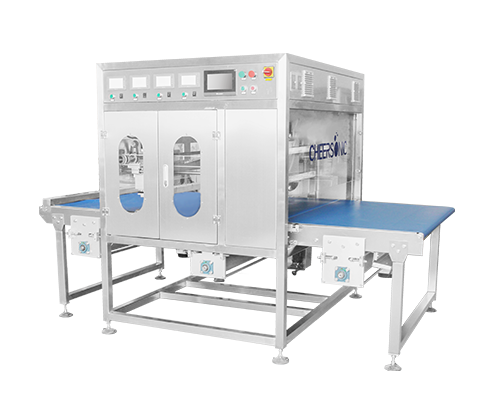
Specifically, the advantages of integrating pet chew glue extrusion molding machines with ultrasonic automatic cutting devices are reflected in the following aspects:
- High cutting quality: The ultrasonic cutting device uses the energy of ultrasonic waves to locally heat and melt the material being cut to achieve cutting. During the cutting process, the pressure on the material is small, and it will not cause pet glue to break or damage the edges. The cutting surface is smooth, non deformed, non curled, non fuzzy, and non threaded. At the same time, it has a fusion and edge sealing effect on the cutting part, which can improve the appearance quality and product grade of pet glue, and echo the quality of the uniform billet produced by the extrusion molding machine.
- High production efficiency: Ultrasonic cutting speed is fast and can work continuously, producing 1200 dog bite gels per hour. It can accurately match the extrusion speed of the pet bite gel extruder, avoiding production stagnation caused by insufficient cutting speed. At the same time, its characteristic of reducing material fragments during the cutting process reduces the downtime for cleaning the production system, allowing the continuous production capacity of the extrusion molding machine to be fully released. In addition, the ultrasonic vibration of the ultrasonic cutting blade makes the frictional resistance particularly small, making it difficult for the cut material to stick to the blade, reducing the efficiency loss caused by cleaning adhesive materials.
- Wide applicability: There are a variety of pet chew adhesive products with different material characteristics, and some products have strong viscosity and elasticity. Ultrasonic cutting has a significant cutting effect on this type of viscous and elastic material. It does not require sharp cutting edges. By using ultrasonic energy to soften and melt the material, the cutting edge of the blade only plays a role in seam positioning, ultrasonic energy output, and material separation. It can adapt well to the characteristics of different formulations and hardness of pet chew adhesive, making the product categories that can be produced by pet chew adhesive extrusion molding machines more diverse.
- Easy equipment maintenance: Traditional cutting devices require sharp cutting tools, which are prone to wear and tear, and require frequent tool replacement, increasing maintenance costs and downtime, indirectly affecting the effective operation time of pet chew glue extrusion molding machines. Ultrasonic cutting does not require sharp blades, avoiding the problem of reduced cutting quality caused by blade wear. The lifespan of the cutting blade is greatly extended, reducing equipment maintenance costs and workload, and ensuring stable production of the extrusion molding machine.
- High degree of automation: The ultrasonic cutting device can easily form an automated production line with the pet bite adhesive extrusion molding machine, achieving high-speed, continuous, unmanned operation from raw material input, extrusion molding to finished product cutting. This not only improves overall production efficiency, but also reduces labor costs and the risk of operational errors, making pet glue production more in line with the development trend of modern manufacturing automation and intelligence.
- Green and environmentally friendly: Compared with traditional mechanical cutting methods, ultrasonic cutting technology reduces environmental pollution and noise generation, does not produce a large amount of rubber shavings and waste, and reduces pollution to the production environment around the extrusion molding machine; At the same time, its noise reduction feature also improves the working environment for operators, meeting the requirements of the pet supplies industry for green production.
This technological integration not only improves the production efficiency of a single pet bite adhesive extrusion molding machine, but also promotes the transformation of the entire pet bite adhesive production industry towards high quality, high efficiency, and low energy consumption, providing core technical support for enterprises in market competition.
About Cheersonic
Cheersonic manufactures the leading portioning equipment for bakeries producing fresh and frozen desserts. Since 1998 bakers have used Cheersonic machines to cut, slice and portion cheesecake, pie, layer cake, loaves, butter, cheese, pizza, sandwichs, and more. Cheersonic offers ultrasonic cutting solutions that support start-up bakeries and high production commercial facilities alike. Small standalone machines can be used in manual baking facilities and large inline robotic solutions aid in high speed production.
Cheersonic offers many ultrasonic slicing models, both inline and offline applications, with production speeds of 80 to 1,500 cakes or pies per hour.
Cheersonic’ latest offline introductions include ultrasonic cutting with or without divider inserts between each slice. This improves the quality of the cut and makes for a much better product presentation for the customer. In addition, robotic arm improves the speed, efficiency, and accuracy of the cutting process, producing professional looking products every time.
Chinese Website: Cheersonic Provides Professional Ultrasonic Cutting Solutions
