
Ultrasonic Butter Cutting
1. Principle
High-Frequency Vibration Cutting: Ultrasonic cutting utilizes high-frequency vibrations (typically between 20kHz and 40kHz) generated by an ultrasonic generator, which converts electrical energy into mechanical energy via a transducer. When these high-frequency vibrations are transmitted to the cutting tool, the tool vibrates at an extremely high frequency. For a viscous material like butter, the high-frequency vibrations allow the tool to easily penetrate the butter, rather than relying on high pressure to force the tool through as with traditional cutting methods.
Disruption of Intermolecular Forces: When ultrasonic waves propagate through butter, they create alternating regions of compression and rarefaction. In these compressed regions, the distance between molecules decreases, increasing pressure; in these rarefaction regions, the distance between molecules increases, decreasing pressure. This cyclical pressure fluctuation disrupts the cohesive forces between the butter molecules, making it easier to separate them during cutting. Furthermore, the ultrasonic energy can locally increase the temperature of the butter, reducing its viscosity and further facilitating cutting.
2. AdvantagesHigh Cutting Quality:
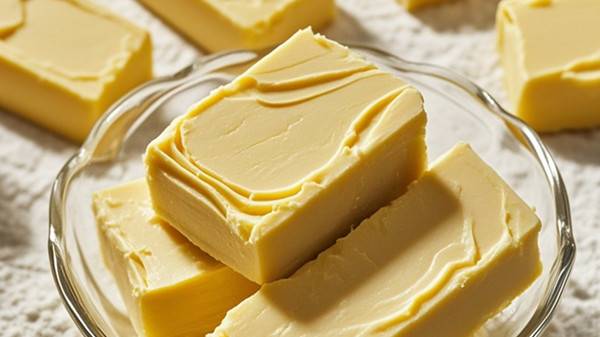
Smooth Cutting Surface: Because ultrasonic cutting uses high-frequency vibrations, the cutter does not excessively squeeze or deform the surrounding butter, resulting in a very smooth cut surface. This is crucial for applications where the shape and appearance of the butter are crucial, such as high-end catering and food processing displays.
Dimensional Accuracy: Ultrasonic cutting allows for precise control of the cut size and shape. By adjusting parameters such as the cutting tool’s vibration frequency, cutting speed, and cutting depth, butter can be cut into various precise dimensions. This allows for precise dimensional requirements, such as when creating butter carvings or making small pieces for baking.
High Cutting Efficiency:
Fast Cutting Speed: Compared to traditional cutting methods, ultrasonic cutting is faster. This is because ultrasonic vibrations quickly break down the butter’s structure, making the cutting process smoother and reducing cutting resistance, thereby increasing cutting speed. This can significantly improve production efficiency in industrial production or large-scale butter processing.
High Continuous Cutting Capability: Ultrasonic cutting tools maintain high cutting efficiency for extended periods, preventing the tool from sticking to the butter or reducing cutting performance. This ensures consistent cutting quality and speed even when continuously cutting large quantities of butter.
Hygienic and Environmentally Friendly:
No Tool Wear and Pollution: During ultrasonic cutting, the blade uses high-frequency vibrations to cut, resulting in minimal friction with the butter, resulting in minimal tool wear. This means that metal debris from tool wear is not introduced into the butter during the cutting process, ensuring the butter’s purity and hygienic quality.
Easy to Clean: The cutting equipment is relatively simple, and the blades have a smooth surface. After cutting, any remaining butter on the blades and equipment is easily cleaned. This is highly beneficial for meeting hygiene standards in the food processing industry and reduces cleaning time and costs.
3. Application Scenarios
Food Processing Industry:
Baking: When making baked goods such as bread and pastries, butter needs to be cut into small pieces or thin slices before adding to the dough. Ultrasonic cutting can precisely cut the butter to the size required by the recipe, and the smooth cut surface allows for better mixing with the dough, improving the quality and taste of the baked goods. Butter Product Processing: When creating butter sculptures and butter shapes, ultrasonic cutting helps artisans cut butter into various complex shapes while ensuring precise shapes and a smooth surface, resulting in more aesthetically pleasing butter products.
Catering Industry:
Table Service: In high-end restaurants, butter is cut into delicate shapes for table service, such as small cubes or thin slices placed alongside bread baskets. Ultrasonic cutting can quickly complete the cutting process and ensure that each piece of butter is of uniform shape and size, enhancing the quality of catering services.
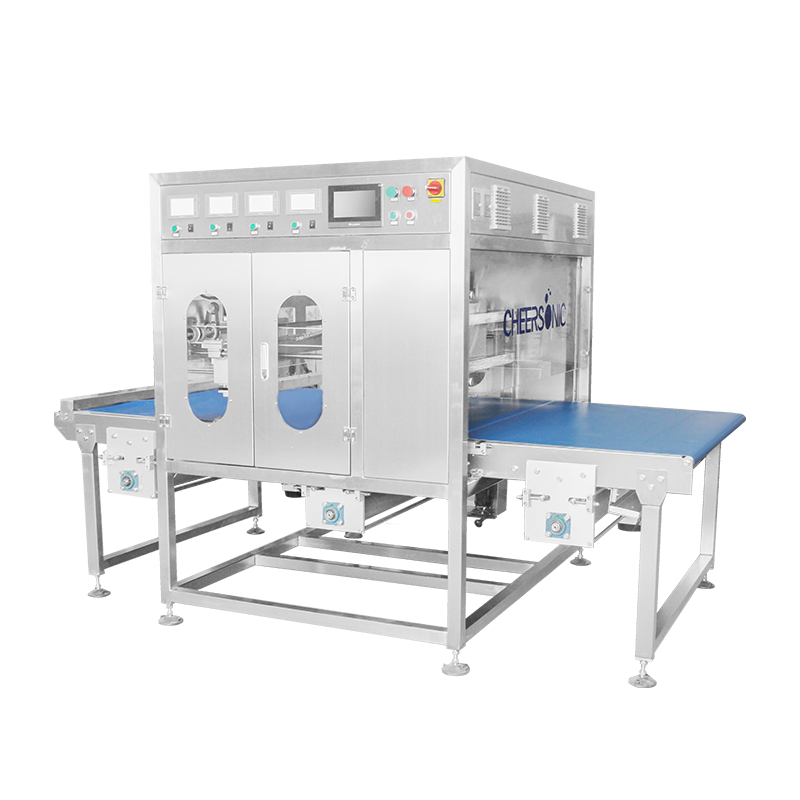
Cheersonic offers many ultrasonic slicing models, both inline and offline applications, with production speeds of 80 to 1,500 cakes or pies per hour.
Cheersonic’ latest offline introductions include ultrasonic cutting with or without divider inserts between each slice. This improves the quality of the cut and makes for a much better product presentation for the customer. In addition, robotic arm improves the speed, efficiency, and accuracy of the cutting process, producing professional looking products every time.
Chinese Website: Cheersonic Provides Professional Ultrasonic Cutting Solutions
