
Ultrasonic Cutting Knives
Cheersonic Ultrasonic Cutting Knives: Game-Changing Advantages Over Traditional Cutting Blades for Food Production
In modern commercial baking and large-scale food manufacturing, cutting precision, production efficiency, and cost control define the competitiveness of a production line. Traditional mechanical cutting knives and manual cutting tools have long served food production facilities, yet they suffer from inherent flaws including slow operating speeds, material waste, uneven portioning, and frequent human-induced errors. As the food industry pursues standardized, high-speed, and low-loss production, ultrasonic cutting knives have emerged as an innovative alternative, bringing transformative upgrades to food processing workflows. By leveraging high-frequency ultrasonic vibration technology, these advanced tools effectively solve the pain points of conventional cutting blades, helping bakeries and food production plants boost line speeds, minimize material waste, standardize portion sizes, and eliminate operational liabilities and human error.
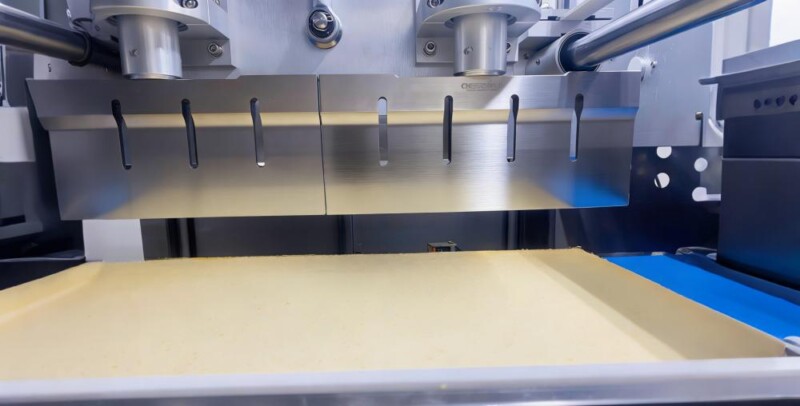
The most intuitive advantage of ultrasonic cutting knives is their ability to significantly increase production line speeds without compromising cutting quality. Traditional food cutting relies on mechanical blade pressure to slice through ingredients such as cakes, bread, cheese, and frozen desserts. This contact-based cutting method requires slow, steady movements to avoid crushing or deforming soft, sticky, or layered food materials, which severely limits overall line throughput. In contrast, ultrasonic cutting knives generate tens of thousands of high-frequency micro-vibrations per second. These microscopic vibrations reduce friction between the blade and food surface, enabling smooth, clean cuts with minimal contact pressure. Food manufacturers can run production lines at a far faster pace while maintaining stable cutting results. For high-volume baking facilities handling thousands of pastries daily, this speed enhancement directly elevates daily output and shortens production cycles, greatly improving operational efficiency and market responsiveness.
Beyond speed optimization, ultrasonic cutting knives drastically reduce production waste, a critical benefit for cost-sensitive food enterprises. Conventional cutting blades often cause common processing losses: sticky food residues adhere tightly to blade surfaces, requiring frequent production pauses for cleaning; blunt or rigid blades tear soft food edges, crumble layered pastries, or squeeze out fillings, generating large amounts of defective and leftover materials. Over mass production runs, these minor losses accumulate into substantial economic waste. Ultrasonic vibration effectively repels food adhesion, keeping the blade surface clean during continuous operation and eliminating frequent shutdown cleaning. Meanwhile, the vibration-assisted cutting process delivers neat, intact cuts with no crumbs, deformation, or filling leakage. This near-lossless cutting mode maximizes the utilization rate of raw materials, cutting down material costs and reducing industrial food waste for bakeries and food factories.
Uniform portioning is another core strength that distinguishes ultrasonic cutting knives from ordinary cutting tools, completely eliminating inconsistent portions in mass production. Manual cutting and traditional mechanical cutting are highly susceptible to external interference: workers’ hand strength, cutting angles, and operational fatigue lead to uneven portion weights and sizes; mechanical blade wear and unstable equipment operation also cause inconsistent finished products. Uneven portions not only affect product appearance and consumer experience but also lead to non-compliant products that fail industry standards. Ultrasonic cutting equipment supports precise digital parameter setting, with fixed cutting trajectories and standardized cutting depth. Every slice of bread, cake block, and snack portion maintains consistent size and weight, realizing full-process standardized cutting. This uniformity stabilizes product quality, unifies product specifications, and helps food enterprises meet strict food processing and packaging standards.
Most importantly, ultrasonic cutting knives effectively remove operational liability and human error, optimizing production safety and management stability. Manual cutting relies heavily on worker experience, and human fatigue, operational negligence, and skill differences inevitably cause cutting errors, defective products, and even safety accidents such as blade scratches. These human factors not only increase product rework and scrap rates but also trigger potential safety hazards and operational liability risks for factories. Ultrasonic cutting realizes automated and intelligent cutting operation, reducing manual participation in the core cutting process. With preset programs, the equipment operates stably and accurately throughout production, avoiding all errors caused by human operation. Additionally, its efficient and continuous working performance reduces frequent manual intervention, lowering labor management costs and workplace safety risks.
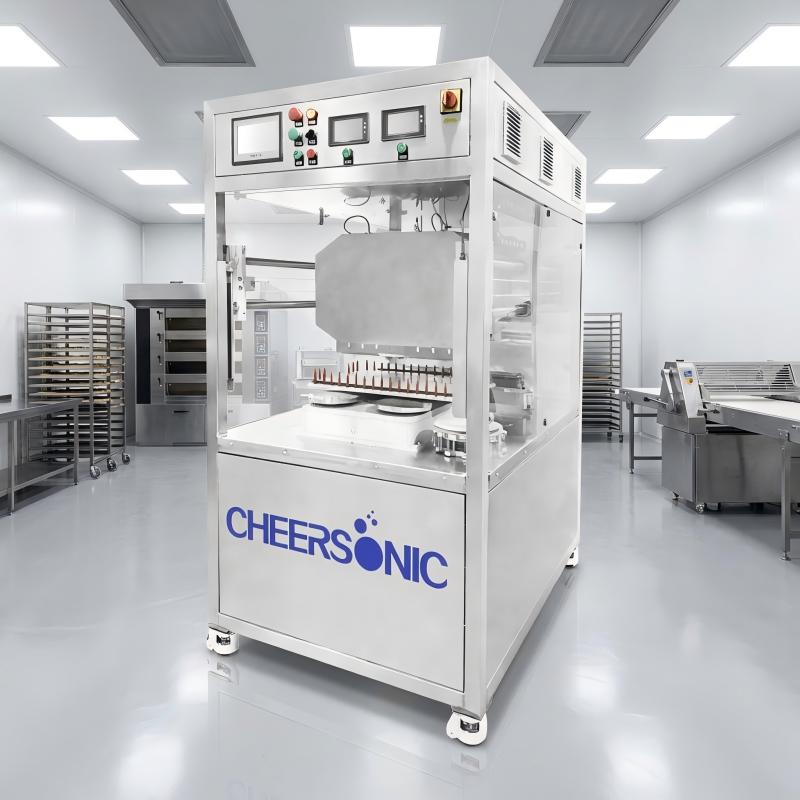
In conclusion, ultrasonic cutting knives outperform traditional cutting blades in speed, material utilization, product standardization, and operational safety. As the food and baking industry continues to upgrade toward automation and high-efficiency production, ultrasonic cutting technology has become an indispensable core processing solution. It not only helps enterprises improve production efficiency and reduce comprehensive costs but also lays a solid foundation for standardized, safe, and sustainable food production.
About Cheersonic
Cheersonic manufactures the leading portioning equipment for bakeries producing fresh and frozen desserts. Since 1998 bakers have used Cheersonic machines to cut, slice and portion cheesecake, pie, layer cake, loaves, butter, cheese, pizza, sandwichs, and more. Cheersonic offers ultrasonic cutting solutions that support start-up bakeries and high production commercial facilities alike. Small standalone machines can be used in manual baking facilities and large inline robotic solutions aid in high speed production.
Cheersonic offers many ultrasonic slicing models, both inline and offline applications, with production speeds of 80 to 1,500 cakes or pies per hour.
Cheersonic’ latest offline introductions include ultrasonic cutting with or without divider inserts between each slice. This improves the quality of the cut and makes for a much better product presentation for the customer. In addition, robotic arm improves the speed, efficiency, and accuracy of the cutting process, producing professional looking products every time.