
Ultrasonic Cheese Cutting
1. Principle of Ultrasonic Cheese Cutting
High-frequency vibrations disrupt internal structure: Ultrasonic cutting equipment uses an ultrasonic generator to generate a high-frequency electrical signal. The transducer converts the electrical energy into mechanical energy, causing the cutting blade to generate high-frequency vibrations (typically 20-40kHz). When the blade contacts the cheese, these high-frequency vibrations are transmitted into the cheese, disrupting the internal structure formed by components such as protein and fat. Cheese is a semi-solid substance composed of a network of proteins and fat globules. High-frequency vibrations weaken the connections between these components, making it easier for the blade to cut, without the compression and deformation of the cheese caused by traditional cutting methods.
Reducing Friction and Sticking: Ultrasonic high-frequency vibrations also effectively reduce friction between the blade and the cheese. During the cutting process, the cheese is less likely to stick to the blade. This is because the vibrations constantly change the contact state between the cheese and the blade, preventing any sticky interaction between the cheese and the blade, making the cutting process smoother.

2. Advantages of Ultrasonic Cheese Cutting
Cutting Quality:
Smooth Cutting Surface: Because cutting is achieved through high-frequency vibrations, the blade does not excessively compress the cheese, resulting in a very smooth cut surface. This is crucial for situations where the internal texture of cheese needs to be displayed, such as cheese tastings and high-end cheese displays. It also facilitates subsequent processing, such as applying sauces or topping cheese slices with other ingredients.
Precise Shape Retention: Whether cutting into thin slices or complex shapes, ultrasonic cutting effectively maintains the cheese’s shape. For cheese products requiring specific shapes (such as handmade fancy cheeses or decorative cheese sculptures), this precise cutting process avoids damaging the cheese’s design and preserves its aesthetic appeal.
Cutting Efficiency:
Fast Cutting Speed: Compared to traditional cutting methods, the high-frequency vibrations of ultrasonic cutting tools enable the cutter to penetrate and complete the cut quickly. In cheese processing plants or at sales locations, this rapid cutting speed significantly improves efficiency and meets the needs of cutting large quantities of cheese.
Excellent Continuous Cutting Performance: Ultrasonic cutting tools maintain efficient cutting performance for extended periods, with minimal tool sticking or degradation. This significant advantage is particularly advantageous when continuously cutting large quantities of cheese, ensuring consistent cutting quality and speed, reducing time wasted cleaning the tool or adjusting the cutting method.
Hygiene and Quality:
Reduced Debris: Ultrasonic cutting cuts the cheese cleanly, resulting in relatively few debris. This not only keeps the cutting area clean but also minimizes the impact of debris on the cheese’s freshness. Traditional cutting processes can leave cheese debris on the surface, accelerating its deterioration.
Avoiding Contamination Risk: Ultrasonic cutting cutters do not produce metal debris due to wear, preventing it from entering the cheese and ensuring food safety. Furthermore, the smooth cut surface of the cheese facilitates packaging and storage, reducing the risk of microbial growth.
3. Applications of Ultrasonic Cheese Cutting
Food Processing Industry:
Cheese processing plants: During cheese production, cheese needs to be cut into various sizes and shapes to meet diverse product requirements. Ultrasonic cutting can be used to cut large blocks of cheese into uniformly sized pieces or to slice cheese for packaging and distribution, such as in the production of sliced cheese.
Food Ingredient Processing: When preparing foods containing cheese (such as pizza and risotto), cheese needs to be cut into appropriate shapes and sizes for use as an ingredient. Ultrasonic cutting can precisely shape cheese to the desired shape, improving food production efficiency and quality.
Food and Retail Industries:
Restaurant and hotel kitchens: Cheese is used in cooking processes such as salads and pasta. Ultrasonic cutting can quickly cut cheese into the desired shape and size, making it easier for chefs to work with the cheese while preserving its appearance and taste.
Cheese specialty stores and supermarkets: Ultrasonic cutting provides high-quality cutting services for displaying and cutting cheese for customers at the point of sale. The resulting cheese has an attractive shape and smooth cut surface, attracting customers. Furthermore, it can quickly cut cheese into different sizes to suit customer needs.
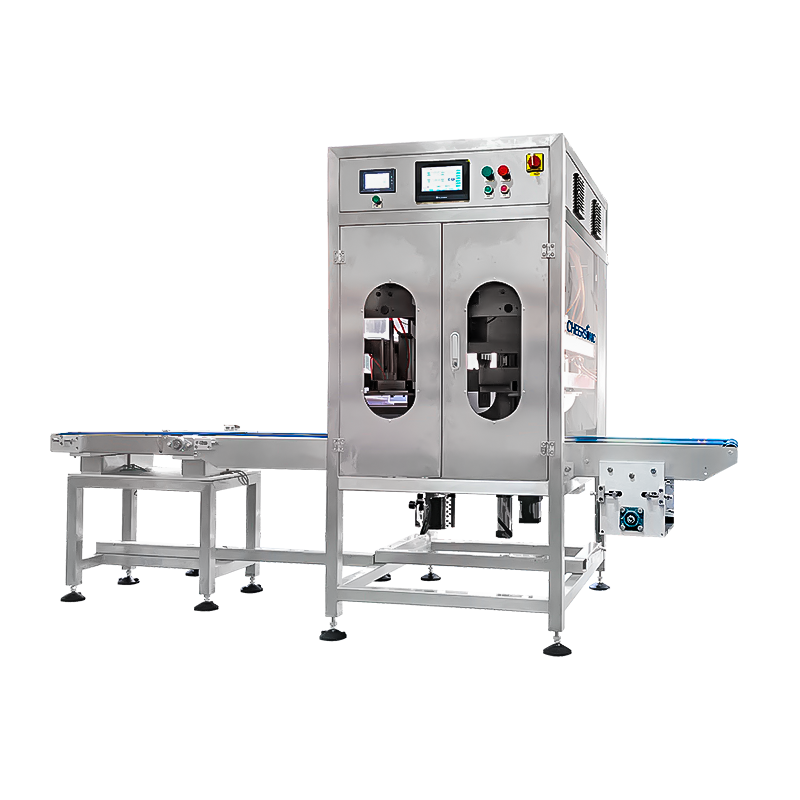
Cheersonic offers many ultrasonic slicing models, both inline and offline applications, with production speeds of 80 to 1,500 cakes or pies per hour.
Cheersonic’ latest offline introductions include ultrasonic cutting with or without divider inserts between each slice. This improves the quality of the cut and makes for a much better product presentation for the customer. In addition, robotic arm improves the speed, efficiency, and accuracy of the cutting process, producing professional looking products every time.
Chinese Website: Cheersonic Provides Professional Ultrasonic Cutting Solutions
