
Why can’t we keep up with internet celebrities baking?
Have you noticed that the rapid iteration of popular food on the internet nowadays is dazzling, and the style is gradually deviating from the familiar track?
Taking baking as an example, the image in memory is always simple and familiar:
But now, it has undergone a transformation – the filling is piled up almost overflowing, the volume keeps expanding, as if it is about to break through the boundary visually.
The product name is also like piecing together a hot search lexicon, becoming increasingly exaggerated as it grows, like a “traffic keyword list”
Internet celebrity products are constantly emerging, with prices rising steadily. Many shop owners have set up strict rules such as queuing, reservation, and purchase restrictions, and their posture is becoming increasingly strong.
We cannot help but be confused: what exactly happened to baking? Are these internet famous products covered in “visual buffs” really worthy of their hype?
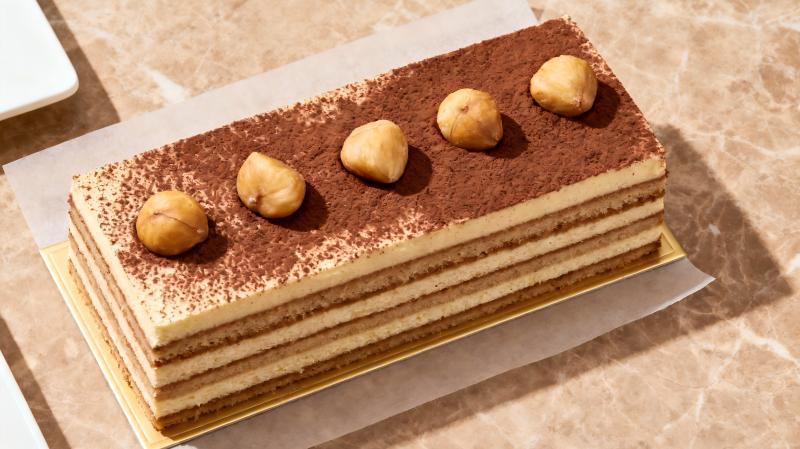
Today, let’s take a look at the evolution of internet celebrity baking and see how it has gradually taken on its current form.
Since the 1980s, baking culture has gradually emerged in China. Looking back at the products at that time, the style can be described as rustic.
Family style bakeries can be seen everywhere on street corners and alleys, with honey cakes and old-fashioned small breads being classic memories in the hearts of many people.
In the 1990s, the chain operation model quietly emerged, and a group of early baking brands emerged one after another, with stores gradually spreading throughout cities.
However, at that time, the types of products were still relatively limited: toast, egg tarts, wheat cakes, cake rolls… Although not unfamiliar, they were far from forming an internet celebrity trend.
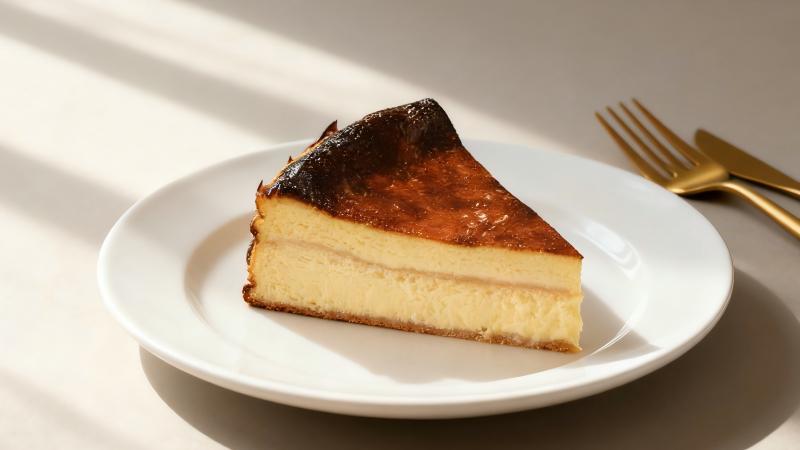
When it comes to the first generation of internet celebrity baking, many people will think of the trend of freshly baked cheesecake that swept the time. Back then, many people lined up for it.
Around 2013, this type of product started in Shanghai, focusing on “freshly baked and sold, with a smooth texture” and a high unit price.
With its “freshly baked” selling point and long lines of hunger marketing, it quickly became popular. However, due to the low technological threshold, a large number of imitators with similar names and categories quickly emerged in the market, quickly diverting the heat and gradually fading the halo of the first generation of internet celebrities.
The time has come to the end of 2015. With the popularity of social media, a cheese bag unexpectedly became popular due to a celebrity accidentally “selling” it.
The fluffy and sweet cheese buns flooded the internet almost overnight, causing a shortage of supply and even leading to difficulties in booking and scalpers purchasing on their behalf.
Among many short-lived internet celebrity products, cheese buns can be called “longevity players”. The brand that launched it continuously cultivates this single product, extending from a popular item to multiple flavors and forms, ultimately creating it into a classic evergreen style.
Following closely behind is the popularity of ‘dirty bags’. Similarly, with the help of celebrities and social media platforms, “eating cocoa powder all over your hands and face” has become a trend symbol for a while.
The “dirty” style also ushered in the “additive era” of baking: chocolate bars were embedded in chocolate croissants, and the outer layer was sprinkled with rich ganache, then sprinkled with cocoa powder.
When tasting, it is almost necessary to give up image management, open your mouth wide, and immerse yourself in the satisfaction of chocolate rushing – what you want is the pleasure that disregards image.
Similarly, there is the classic meat floss scallop that has gone from being an internet celebrity to becoming a long-term sensation. It doesn’t rely on celebrity promotion, it relies entirely on word-of-mouth communication among diners.
Freshly baked and sold, this is a golden combination of meat floss, salad dressing, and cake. With plenty of sauce and ingredients, it is visually striking at first glance.
Nowadays, this product has spawned multiple flavors and formed a series, among which “Nai Bei” has become a new round of bestsellers, continuously attracting attention.
It has to be said that this is inseparable from the brand’s continuous polishing of product strength.
With the increasingly fierce competition in the baking industry, there are no longer a few brands dominating the market. The trend of fashion is constantly changing and can be roughly summarized into the following directions:
1. Adding extra filling without limit
Only unexpected, there is no filling that cannot be filled.
Kesong, who was originally the protagonist of breakfast in Europe, came to China and was filled with various fillings, playing with endless patterns.
The compact macaron also tends to expand, thicken, sandwich, and change color, transforming into a “Korean style chubby macaron”.
Beiguo is no exception, its round and plump shape is stuffed into all the edible ingredients, and its thickness is almost unbearable.
As for Western style pastries, Chinese style Dim sum also failed to get rid of the trend of “adding ingredients”.
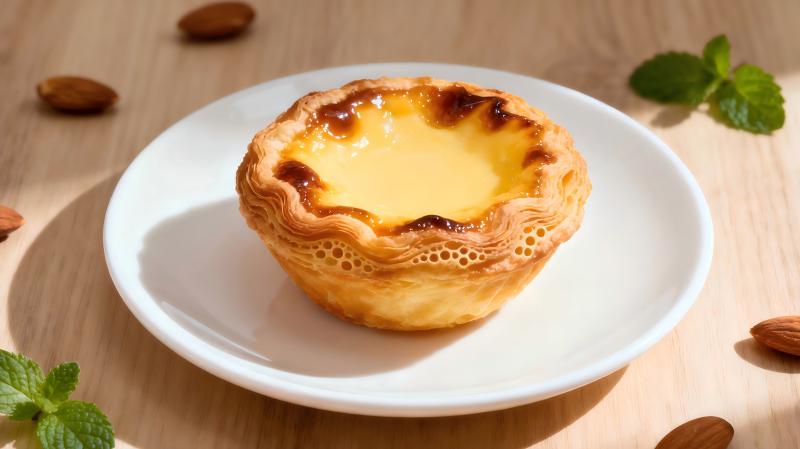
Traditional egg tarts constantly raise the tower body to accommodate more flowing and brushed fillings – this full-bodied visual effect accurately captures consumers’ interests.
2. Body type upgrade, visual first
After the butterfly puff pastry that is bigger than the face, this year we have also welcomed the popular product of XXXXXL – the giant cheese tart.
A whole plate is placed on the table, and the visual impact is directly filled. Young people pursue novelty and “beauty”, and “size” is the weapon that attracts attention.
3. Integration of Chinese and Western cultures, creative mix and match
When it comes to the integration of Chinese and Western styles, one cannot help but mention a group of brands labeled as “New Chinese Baking”, which have taken this path of integration to great success.
One soft and sticky potato at a time, causing long queues in stores and making each one popular.
Mash potatoes are also filled into Napoleon, egg tarts, and plate tarts, with a stringy effect that is as tempting as a waterfall.
With the widespread adoption of Chinese ingredients in the baking industry, taro paste, purple rice, yellow rice, and dried meat have become new fillings in dough.
In recent years, the popularity of butter rice cake has been comparable to that of meat floss and scallops, making it a phenomenal new product. As for the heat? Paired with ice cream, it seems like it can ‘automatically counteract’ (just kidding).
Chinese flavor is more appealing to the stomach.
The local flavors of Yunnan, Guizhou, Sichuan, and Chongqing have also debuted in groups, such as sour soup beef, Yunnan mushroom seeds… Nowadays, it seems that every bakery has borrowed these local specialty IPs.

The reason why internet celebrity products can dance with traffic is often because they touch people’s sensory instinct of “being tempted at a glance”.
The tempting color and rich layers of food are more likely to stimulate appetite. In the era of social media, composition and color matching are highly valued, and visual appeal is infinitely amplified.
For baking professionals, finding a balance between visual presentation and taste is a must answer question and a path worth exploring in the long run. From material selection, formula, color to craftsmanship, creativity, and user feedback – every step requires repeated deliberation.
Becoming an internet celebrity may not be difficult, but the challenge is to continue to be popular. Only by making “delicious” an irreplaceable core can we cross the cycle and go further.
About Cheersonic
Cheersonic manufactures the leading portioning equipment for bakeries producing fresh and frozen desserts. Since 1998 bakers have used Cheersonic machines to cut, slice and portion cheesecake, pie, layer cake, loaves, butter, cheese, pizza, sandwichs, and more. Cheersonic offers ultrasonic cutting solutions that support start-up bakeries and high production commercial facilities alike. Small standalone machines can be used in manual baking facilities and large inline robotic solutions aid in high speed production.
Cheersonic offers many ultrasonic slicing models, both inline and offline applications, with production speeds of 80 to 1,500 cakes or pies per hour.
Cheersonic’ latest offline introductions include ultrasonic cutting with or without divider inserts between each slice. This improves the quality of the cut and makes for a much better product presentation for the customer. In addition, robotic arm improves the speed, efficiency, and accuracy of the cutting process, producing professional looking products every time.
Chinese Website: Cheersonic Provides Professional Ultrasonic Cutting Solutions
