
Guide to making soft and fragrant bread in autumn and winter
Why is it more challenging to make fermented bread in autumn and winter?
Making fermented staple bread in autumn and winter is often more challenging than in other seasons, with the core issue focusing on the dual effects of temperature and humidity: firstly, the low ambient temperature makes it difficult to maintain the overall temperature of the dough within an appropriate range; Secondly, low temperature will directly reduce the activity of fermentation bacteria, causing a significant slowdown in the expansion rate of dough; In the final autumn and winter, the air is dry, and the surface moisture of the dough evaporates too quickly, which can easily lead to dry and hard crust, affecting the final taste.
The key techniques for successfully making high-quality bread in autumn and winter
To make staple bread with soft organization and rich aroma in autumn and winter, it is necessary to first clarify the specific impact of low temperature and low humidity environment on the production process, in order to solve the problem targetedly.

1. Analysis of core influencing factors
The direct effect of temperature on fermentation strains: The most active temperature range for fermentation strains is between 25 ℃ and 38 ℃. Within this range, the strains have vigorous metabolism and can continuously produce enough gas to make the dough expand. When the ambient temperature is below 20 ℃, the metabolic efficiency of the bacterial strain will significantly decrease, the ability to produce gas will weaken, directly leading to the dough not being able to rise or insufficient expansion.
The fusion characteristics of flour and water: In low temperature and low humidity autumn and winter, the binding speed of protein and water in flour will slow down, and the time to form gluten will be correspondingly prolonged. If not handled properly, it is easy to encounter problems such as uneven dough kneading and poor extensibility.
2. Targeted solutions
(1) Activate fermentation power and lay a solid foundation: To restore the vitality of the bacterial strains, the key is to adjust the temperature of the liquid raw materials. It is recommended to use warm water or milk at 30-34 ℃, as this temperature can gently activate the bacterial activity. The pre activation method can also be used: mix the strain with 1/3 of the warm water and a small amount of granulated sugar in the formula, let it stand for 5-10 minutes, and add the dough after the fine foam appears on the surface, so as to confirm the strain activity in advance and avoid subsequent failure.
(2) Accurately control the dough temperature and keep it warm: ice packs are commonly used in summer to cool down the mixing tools, while reverse operation is required in autumn and winter. You can rinse and dry the mixing container with warm water in front of you, increase the base temperature of the container, and avoid the cold metal container absorbing the heat of the dough. At the same time, it is necessary to choose a suitable time for the meeting, and try to avoid the lowest room temperature periods such as early morning or late night. Operating at room temperature above 20 ℃ will be smoother.
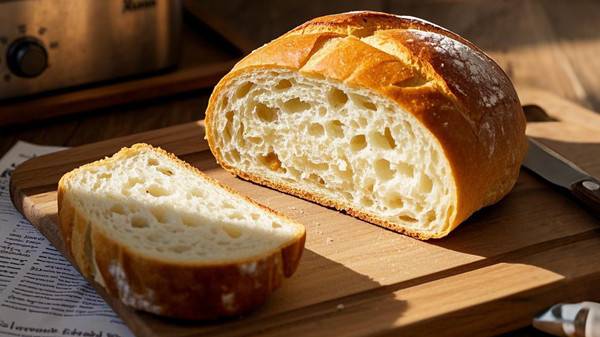
(3) Create a suitable fermentation environment and simulate the “greenhouse” effect: When the room temperature is too low, a home oven can be used to create a warm and humid environment. Put the kneaded dough into a container and cover it with plastic wrap. After placing it in the oven, set the fermentation mode to 28 ℃. At the same time, place a bowl of freshly boiled hot water next to it, close the oven door tightly, and use the moisture evaporated by the hot water to keep the environment moist, providing ideal fermentation conditions for the dough.
If there is ample time, it is recommended to use low-temperature refrigerated fermentation method. Place the dough after shaping into a mold, cover it with plastic wrap, and refrigerate it at 4-7 ℃ for 12-17 hours in the refrigerator. Long term fermentation at low temperatures not only enhances the flavor and texture of bread, but also avoids the problem of low room temperature during the day. After removing the mold the next day, let it sit at room temperature for 30 minutes to warm up, then place it in the oven to complete the final fermentation.
Frequently Asked Questions about Autumn and Winter Production
Q: What should I do if the dough still hasn’t filled the mold after 3 hours of fermentation?
A: Firstly, check if the bacterial strain has insufficient activity, which can be retested using pre activation methods; Next, immediately create a warm environment of 28-35 ℃ while ensuring humidity. You can spray a small amount of warm water on the surface of the dough before fermentation.
Q: The fermentation speed of the dough is too slow. Can the temperature be suddenly increased midway to accelerate?
A: It is not recommended to operate in this way. A sudden increase in temperature can cause metabolic disorders in the bacteria, resulting in gases that cannot be evenly wrapped by gluten, ultimately leading to the formation of large pores inside the bread, affecting its taste and appearance.
Q: What are some easily overlooked tips for autumn and winter production?
A: The amount of liquid in the formula can be increased by 3% -5% compared to summer to compensate for moisture loss caused by dry air; The dosage of bacterial strains can be increased by 0.5% -1% as appropriate to help maintain sufficient activity at low temperatures. In addition, if the dough remains dry during kneading, it can be adjusted by adding a small amount of warm water multiple times to avoid adding too much water at once.
The core of autumn and winter production is to provide the dough with sufficient patience and a suitable warm and humid environment. There is no need to pursue rapid fermentation, let the strains work slowly in warmth to make the perfect staple bread that combines taste and aroma.
About Cheersonic
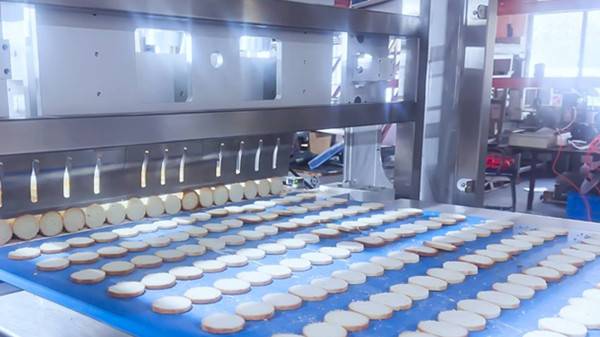
Cheersonic manufactures the leading portioning equipment for bakeries producing fresh and frozen desserts. Since 1998 bakers have used Cheersonic machines to cut, slice and portion cheesecake, pie, layer cake, loaves, butter, cheese, pizza, sandwichs, and more. Cheersonic offers ultrasonic cutting solutions that support start-up bakeries and high production commercial facilities alike. Small standalone machines can be used in manual baking facilities and large inline robotic solutions aid in high speed production.
Cheersonic offers many ultrasonic slicing models, both inline and offline applications, with production speeds of 80 to 1,500 cakes or pies per hour.
Cheersonic’ latest offline introductions include ultrasonic cutting with or without divider inserts between each slice. This improves the quality of the cut and makes for a much better product presentation for the customer. In addition, robotic arm improves the speed, efficiency, and accuracy of the cutting process, producing professional looking products every time.
Chinese Website: Cheersonic Provides Professional Ultrasonic Cutting Solutions
