
2025 Baking Category Development Report
This report, jointly released by relevant industry research institutes and professional dairy companies, focuses on the market status, competitive landscape, product innovation, consumption trends, and future direction of the baking category in 2024-2025. The core content is as follows:
Market Development Overview: Steady Expansion in Scale, Uneven Regional Distribution
1. Market Size
In 2024, the baking (specialty store) market size reached 110.5 billion yuan, a year-on-year increase of 5.2%; driven by the demand for “taste-based emotional healing,” it is expected to increase to 116 billion yuan in 2025.
2. Store Distribution
As of May 2025, there were 338,000 baking stores nationwide, with high regional concentration: East China accounted for 35.0% (highest), while South China, Central China, Southwest China, and North China all accounted for over 10%; among provincial-level administrative regions, Guangdong (11.7%), Jiangsu, Shandong, Zhejiang, and Sichuan ranked in the top 5 in terms of the number of stores.
3. Brand Scale: The market is dominated by small to medium-sized brands, with 49.3% having 5-30 stores and 19.5% having fewer than 5 stores, indicating significant room for scaling up.
4. Online Popularity: In May 2025, baking-related topics garnered 24.97 billion views on Douyin (TikTok), over 8 billion views on Kuaishou, and over one million related posts on Xiaohongshu (Little Red Book), demonstrating how online promotion drove category popularity.
Competitive Landscape: Accelerated Replacement of Old and New Brands, Diversified Business Models
1. Brand Dynamics
The industry is in a dynamic adjustment period of “high opening rate + high closing rate” (opening rate 37.1%, closing rate 34.2% in 2024):
– Traditional/established brands under pressure: Some brands entered bankruptcy liquidation in 2025, ceased operations or closed a large number of stores in 2024, leaving only a few stores remaining;
– The rise of specialty bakeries: Some brands focusing on “product innovation + quality ingredients + visual aesthetics” have become new favorites among young consumers;
– Stable leading brands: Some brands are developing steadily.
2. Explosion in Niche Markets
“Small but exquisite” single-item specialty stores are becoming a trend, showing a “relay-style popularity” from 2013 to 2025—from early cheesecake and cream puffs, to mid-term egg tarts and dorayaki, and then to bagels, Swiss rolls, and scones in recent years, multiple brands are focusing on niche single items.
3. Bakery Factory Expansion into Lower-Tier Cities: Bakery factory brands, operating on a “large and comprehensive + high cost-performance” model, are emerging in third-tier and lower-tier cities (accounting for over 60% of the population in these markets). Their stores are typically over 300 square meters (some reaching 3000 square meters), with prices around 10 yuan per item (30%-50% lower than traditional stores), while simultaneously penetrating first-tier and new first-tier cities.
4. Diversified Channels: In 2024, specialty bakeries (including chains, independent stores, and private bakeries) accounted for 77.0% of shipments, while cross-industry catering (10.4%) and retail (12.6%) still accounted for relatively low percentages. It is projected that by 2030, specialty bakeries will account for 71.0%, while cross-industry catering (14.0%) and retail (15.0%) will continue to rise, with tea, coffee, hot pot, and other categories increasingly integrating with bakery to expand their reach.
Product Innovation: High-End Dairy Products at the Core, Diverse Ingredient Integration
1. New Product Launch Pace and Categories
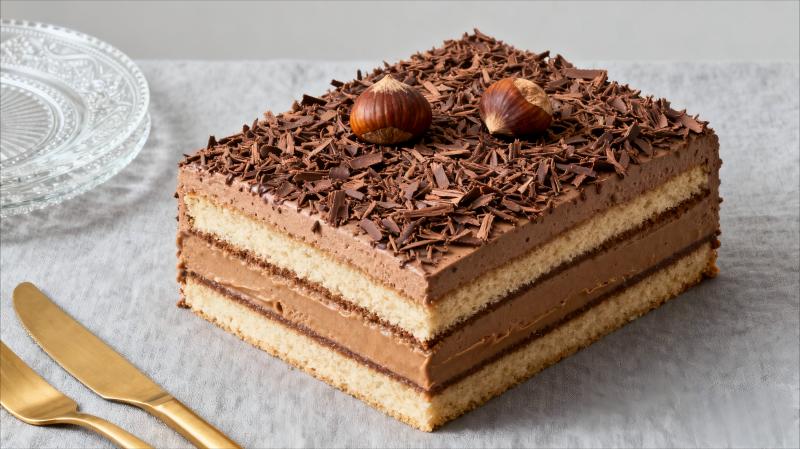
From January to April 2025, 50 sample brands launched a total of 825 new products (an average of 6.5 products per brand per month). Cakes accounted for the highest proportion at 43.8%, followed by Chinese pastries (25.2%) and breads (15.2%).
2. High-End Dairy Products Dominate Innovation
New dairy-containing products accounted for 57.2%, with dairy fats (cream, butter, etc.) accounting for 76.3%, followed by cheese (28.6%) and liquid dairy products (25.4%). High-end dairy products such as mascarpone cheese, mozzarella cheese, and yogurt cream saw a surge in popularity, with some brands incorporating related high-end dairy products into their new product lines.
3. Diversification of Non-Dairy Ingredients: Over 260 non-dairy ingredients are available. Classic ingredients like strawberries, chocolate, and blueberries remain popular, while niche and locally sourced ingredients such as Longjing tea, kale, matsutake mushrooms, and fermented glutinous rice are rapidly emerging. The top 10 fastest-growing non-dairy ingredients include matcha, butter, Longjing tea, and cherries.
4. Segmentation of Application Scenarios: Dairy products are mainly used for “surface decoration” (cream accounts for 36.4%) and “fillings” (cream accounts for 23.9%), while cheese is primarily used in savory products (such as waterfall cheese chicken cutlet buns).
Consumption Trends: Clear Consumer Profiles, Emphasis on Health and Local Preferences
1. Consumer Profile
– Gender/Age: Females account for 68.8%, 19-35 years old accounts for 68.0% (core group);
– Occupation/Marital Status: White-collar workers account for 46.9%, married (53.7%) slightly higher than unmarried (46.3%);
– Consumption Time: Breakfast accounts for 67.9% (core), afternoon tea accounts for 20.7%, other times account for 8.4%.
2. Product Preferences
Classic categories remain mainstream (bread 79.7%, cakes 63.4%, Chinese pastries 45.6%), with frequent “micro-innovation” hit products—such as flat croissants (93.53 million views on Douyin), Chinese-style bread (with local fillings like sour soup beef and sweet and sour pork), and butter rice cakes (30 million sold in 52 days, 460 million views on Douyin).
3. Increased Acceptance of Domestic Raw Materials
56.2% of consumers believe that domestic raw materials can “completely replace” imports, with even higher acceptance among younger consumers under 35 (64.6%), gradually breaking down the “import-only” mentality. Some high-end domestic raw materials have gained market recognition due to their “local origin, short supply chain, no additives, and high cost-effectiveness.”
4. Health and “Cleanliness” Labels Gain Popularity
Health has become a core demand for specific consumer groups: Mothers (focusing on no additives and child-friendly options), fitness enthusiasts (high protein, low carbohydrates, gluten-free), working professionals (convenience and functionality), and trendy women (natural and aesthetically pleasing) are all sensitive to “low sugar, low fat, zero trans fats, and fewer additives.” Organic raw materials are favored, with some organic pure milk (3.3g native protein/100ml, 115mg native calcium/100ml, adhering to organic production standards) helping brands enhance credibility.

Future Outlook: Four Major Trends Leading the Way, Chain Store Development Needs a Breakthrough
1. Core Development Trends
– Health-Focusing: Cleanliness labels (few additives, natural ingredients) have shifted from “differentiated selling points” to “basic requirements,” making healthy baking the norm;
– Localization: High-quality domestic ingredients (premium dairy products, grains) have shifted from “cost-driven” to “quality-driven,” leading to increased adoption by brands;
– Integration: The “+baking” model continues to expand, with tea drinks, coffee, and other beverages leveraging baking to broaden their application scenarios and improve space efficiency, becoming a “second growth curve”;
– Supply Chain Upgrade: Standardization (pre-made raw materials, frozen semi-finished products), cold chain logistics, and digitalization are key, helping brands improve efficiency, reduce costs, and expand on a large scale (the frozen baking market is projected to reach 25 billion yuan by 2025, with some companies accelerating their expansion).
2. Constraints and Countermeasures for Chain Expansion
– Constraints: Low technological barriers (easily replicated recipes and processes), high labor costs (reliance on professional bakers), significant regional limitations (high cold chain requirements), low consumption frequency (mostly snacks/meal replacements), fragmented competitors (supermarkets, online stores, and private shops diverting customers);
– Countermeasures: Build a product moat (ingredient/flavor innovation), improve production efficiency (use frozen baking + smart equipment to reduce reliance on labor), construct regional cold chains (central factory + regional cold chain support for expansion), expand scenarios (develop staple food products to increase frequency), multi-channel operation (online and offline + private domain to increase stickiness).
Key Stakeholders: The Synergistic Role of Specialized Dairy Companies
Some specialized dairy companies, leveraging their supply chain advantages of “30+ milk source bases, 50+ production bases, 1.7 million dairy cows, and 1000+ pastures,” are developing specialized baking ingredients (9 categories including pure milk, cream, and cheese) and providing customized solutions:
– Product Level: Domestically produced mascarpone cheese and organic pure milk align with health and local trends;
– Service Level: Through market insights and resource co-creation, they help baking brands improve production efficiency and quality, promoting upstream and downstream collaboration.
About Cheersonic
Cheersonic manufactures the leading portioning equipment for bakeries producing fresh and frozen desserts. Since 1998 bakers have used Cheersonic machines to cut, slice and portion cheesecake, pie, layer cake, loaves, butter, cheese, pizza, sandwichs, and more. Cheersonic offers ultrasonic cutting solutions that support start-up bakeries and high production commercial facilities alike. Small standalone machines can be used in manual baking facilities and large inline robotic solutions aid in high speed production.
Cheersonic offers many ultrasonic slicing models, both inline and offline applications, with production speeds of 80 to 1,500 cakes or pies per hour.
Cheersonic’ latest offline introductions include ultrasonic cutting with or without divider inserts between each slice. This improves the quality of the cut and makes for a much better product presentation for the customer. In addition, robotic arm improves the speed, efficiency, and accuracy of the cutting process, producing professional looking products every time.