
About Pastry Cutting Machines
About Pastry Cutting Machines – Pastry Cutting – Cheersonic
1. Cutting Principles and Methods
Blade Cutting:
Straight Blade Cutting: Straight blades cut pastries through linear motion. For example, in some bread slicers, the blade moves vertically up and down to cut bread into uniform thin slices. This method is suitable for cutting regularly shaped, soft pastries such as bread and sponge cake.
Zergled Blade Cutting: Serrated blades have serrated edges. The serrations grip the pastry better during cutting, making them suitable for cutting harder, more resilient pastries or those with a hard crust, such as crusty bread and puff pastries. The serrated blade cuts by sawing back and forth or rotating during the cutting process.
Wire Cutting: This method uses a taut steel wire to cut pastries. This method puts less pressure on the pastry and is suitable for cutting soft, easily deformable pastries such as mousse cake and jelly. The steel wire is driven by a mechanical device to pass through the pastry, achieving the cut.
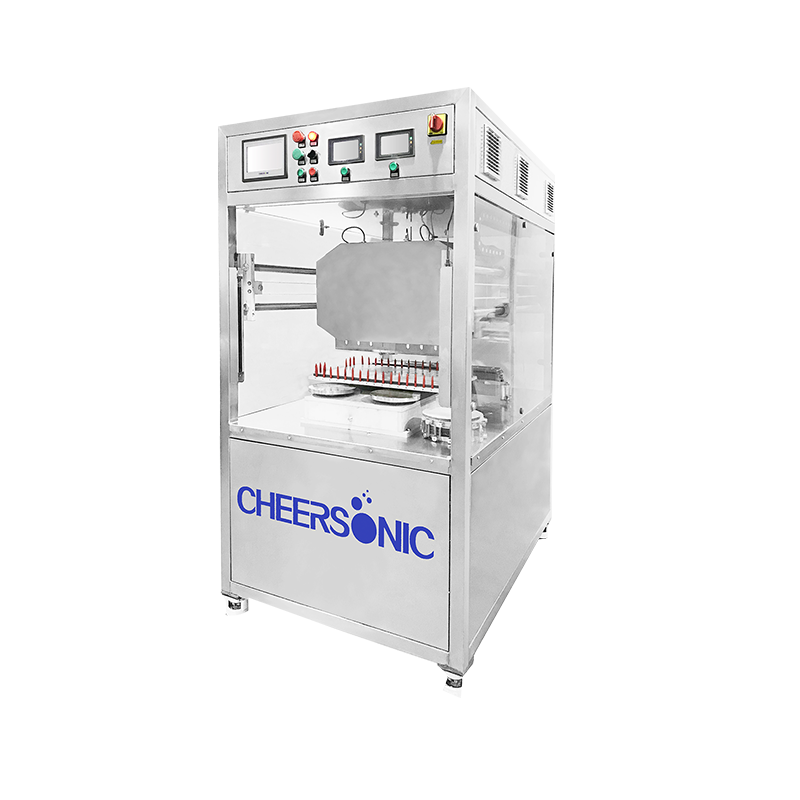
Ultrasonic Cutting: In an ultrasonic pastry cutter, the ultrasonic generator converts electrical energy into high-frequency vibration energy, causing the cutting blade to vibrate tens of thousands of times per second. When the blade contacts the pastry, the high-frequency vibration generates instantaneous localized high temperature and pressure over a very small contact area, rapidly softening and melting the pastry material, thus achieving easy cutting. This cutting method exerts minimal pressure on the pastry, preserving its original shape and internal structure to the greatest extent possible.
2. Factors Affecting Cutting Quality
Blade Quality and Sharpness: High-quality, sharp blades cut pastries more smoothly, reducing breakage and deformation. Dull blades may cause the pastry to be squeezed and deformed, or result in uneven cut surfaces and burrs.
Cutting Speed and Pressure: Appropriate cutting speed and pressure are crucial for ensuring cutting quality. Excessive speed or pressure may cause the pastry to break or deform, while too slow a speed will affect production efficiency. Different cutting speeds and pressures need to be adjusted for different textures of pastries to achieve the best cutting results.
The texture and temperature of pastries: The texture (such as softness, firmness, toughness, stickiness, etc.) and temperature of pastries will affect the cutting results. For example, frozen pastries have a hard texture and require greater cutting force or special cutting methods (such as ultrasonic cutting); while pastries that are warmer and softer are more prone to deformation and require less pressure and a suitable cutting speed.
About Cheersonic
Cheersonic manufactures the leading portioning equipment for bakeries producing fresh and frozen desserts. Since 1998 bakers have used Cheersonic machines to cut, slice and portion cheesecake, pie, layer cake, loaves, butter, cheese, pizza, sandwichs, and more. Cheersonic offers ultrasonic cutting solutions that support start-up bakeries and high production commercial facilities alike. Small standalone machines can be used in manual baking facilities and large inline robotic solutions aid in high speed production.
Cheersonic offers many ultrasonic slicing models, both inline and offline applications, with production speeds of 80 to 1,500 cakes or pies per hour.
Cheersonic’ latest offline introductions include ultrasonic cutting with or without divider inserts between each slice. This improves the quality of the cut and makes for a much better product presentation for the customer. In addition, robotic arm improves the speed, efficiency, and accuracy of the cutting process, producing professional looking products every time.