
Puff Pastry: Composition, Techniques, and Applications
Abstract
Puff pastry is a laminated dough widely recognized for its flaky, delicate layers and versatility in both sweet and savory culinary applications. This white paper examines the historical context, composition, production techniques, scientific principles, and culinary uses of puff pastry, providing an in-depth understanding for professionals and enthusiasts alike.
1. Introduction
Puff pastry, often referred to as “pâte feuilletée” in French cuisine, is a dough that achieves its characteristic flakiness through repeated folding and layering of dough and fat. Unlike other pastries that rely on chemical leavening, puff pastry rises primarily due to steam generated during baking. This unique structure makes puff pastry an essential component in a variety of pastries, tarts, and savory dishes.
2. Historical Context
The origins of puff pastry are traced back to Renaissance Europe, with early references appearing in French and Italian culinary texts. Its development is linked to innovations in laminated dough techniques, which allowed bakers to achieve multiple thin layers of dough separated by fat. Over time, puff pastry has evolved into a staple in classical and modern gastronomy.

3. Composition
Puff pastry is traditionally composed of four key ingredients:
Flour: Provides the structural framework through gluten development. Typically, a medium-protein flour is used to balance elasticity and tenderness.
Fat: Usually unsalted butter or a neutral vegetable fat. Fat is layered between sheets of dough to prevent layers from fusing and to create flakiness.
Water: Hydrates the flour and allows gluten formation. Cold water is used to maintain fat integrity during lamination.
Salt: Enhances flavor and strengthens gluten structure.
Optional ingredients include a small amount of vinegar or lemon juice to further tenderize the dough.
4. Production Techniques
The production of puff pastry involves a series of precise steps:
Détrempe (Base Dough): Flour, water, and salt are combined to form a pliable dough.
Beurrage (Fat Block): Fat is prepared in a pliable, rectangular shape to be incorporated into the dough.
Enclosing and Laminating: The fat is enclosed within the dough, which is then rolled and folded multiple times. Common folding methods include:
Single fold (book fold): The dough is folded in thirds.
Double fold (letter fold): The dough is folded in quarters.
Resting: Refrigeration between folds is critical to relax gluten and maintain fat consistency.
Shaping and Baking: The dough is cut into desired shapes and baked at high temperatures. Steam released from the fat and water causes the dough to expand, forming layers.
5. Scientific Principles
The distinctive texture of puff pastry arises from both mechanical and thermal processes:
Lamination: Folding and rolling create alternating layers of dough and fat. Each layer of fat acts as a barrier, preventing layers of dough from fusing during baking.
Steam Leavening: Water in the dough and fat converts to steam under heat, forcing the dough layers apart.
Maillard Reaction: Surface browning occurs due to the reaction between proteins and reducing sugars, contributing to flavor and visual appeal.
6. Applications
Puff pastry is versatile and used in both sweet and savory contexts:
Savory Uses: Vol-au-vents, turnovers, meat pies, quiches, and tarts.
Sweet Uses: Mille-feuille, palmiers, fruit tarts, and cream-filled pastries.
Modern Innovations: Puff pastry has been adapted into fusion cuisine, miniature appetizers, and frozen convenience products without compromising quality.
7. Storage and Handling
Proper storage is critical to maintaining puff pastry quality:
Refrigeration: Fresh puff pastry should be kept cold to prevent fat melting.
Freezing: Can be frozen for extended periods; thawing should occur in a cool environment to preserve structure.
Baking: Direct baking from frozen is possible, though results may slightly vary in flakiness.
8. Challenges and Considerations
Producing puff pastry requires precision. Common challenges include:
Fat Leakage: Occurs if dough is too warm or poorly laminated.
Incomplete Rise: Results from overworked dough, insufficient layering, or low oven temperatures.
Moisture Control: Excess water can hinder steam formation and layer separation.
9. Conclusion
Puff pastry exemplifies the intersection of culinary artistry and food science. Its success relies on meticulous technique, understanding ingredient interactions, and precise temperature control. Mastery of puff pastry opens opportunities for innovation in both traditional and contemporary culinary applications, making it an indispensable component of professional and home kitchens alike.
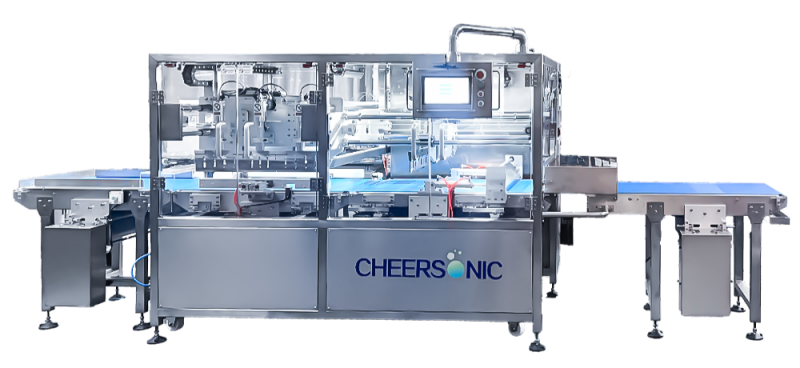
Ultrasonic cutting machine is used to cut puff pastry, using 20-40kHz high-frequency vibration cold cutting. The blade vibrates tens of thousands of times per second to form a gas layer on the contact surface, achieving non-contact separation without compression or adhesion. Traditional cutting tools are prone to crushing and deforming the pastry layer, resulting in low yield rates; Ultrasonic cutting preserves the multi-layer structure intact, with a smooth and flat cut surface, rounded edges, and a reduced amount of debris to less than 5%. The equipment is equipped with CNC positioning, with a size error of ± 0.2mm, suitable for batch standardized production of egg tart skins, thousand layer pastries, etc. Food grade titanium alloy blade head does not generate heat, does not stick to the blade, is easy to clean, meets hygiene standards, and balances quality and efficiency.
About Cheersonic
Cheersonic manufactures the leading portioning equipment for bakeries producing fresh and frozen desserts. Since 1998 bakers have used Cheersonic machines to cut, slice and portion cheesecake, pie, layer cake, loaves, butter, cheese, pizza, sandwichs, and more. Cheersonic offers ultrasonic cutting solutions that support start-up bakeries and high production commercial facilities alike. Small standalone machines can be used in manual baking facilities and large inline robotic solutions aid in high speed production.
Cheersonic offers many ultrasonic slicing models, both inline and offline applications, with production speeds of 80 to 1,500 cakes or pies per hour.
Cheersonic’ latest offline introductions include ultrasonic cutting with or without divider inserts between each slice. This improves the quality of the cut and makes for a much better product presentation for the customer. In addition, robotic arm improves the speed, efficiency, and accuracy of the cutting process, producing professional looking products every time.