
About Ultrasonic Slicers
About Ultrasonic Slicers – Ultrasonic Cutting – Cheersonic
Working Principle
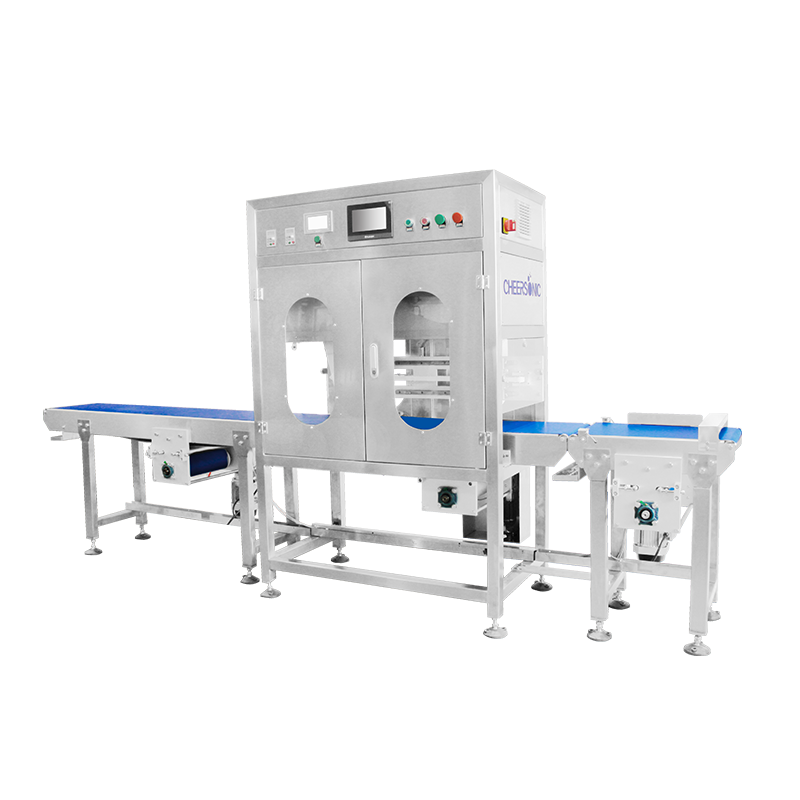
Ultrasonic Vibration System: The core of an ultrasonic slicer is its ultrasonic vibration system. It mainly consists of an ultrasonic generator, a transducer, and an amplitude transformer. The ultrasonic generator converts ordinary electrical energy into a high-frequency alternating current signal, typically between 20kHz and 100kHz. This high-frequency alternating current signal is transmitted to the transducer, which converts the electrical energy into mechanical vibration energy based on the piezoelectric effect. Then, the amplitude of the vibration is adjusted by the amplitude transformer, focusing the vibrational energy and transmitting it to the cutting blade.
Cutting Process: When the high-frequency vibrating blade contacts the material being cut, strong vibrations are generated at the blade-material interface. This vibration causes the material molecules to instantly gain energy, weakening the intermolecular forces. For slicing, the material can be cut with minimal resistance under this high-frequency vibration. This cutting method does not rely on traditional strong compression or friction, but rather utilizes changes in the material’s internal microstructure to complete the cutting.
Application Areas
Food Processing Industry: Used for cutting various pastries, meats, fruits, vegetables, and other foods. For example, whole pieces of meat are sliced into thin slices for processing into ham, bacon, and other processed foods, or cakes, bread, and other baked goods are sliced into uniform thicknesses for easier packaging and sales.
Electronics Industry: In electronic component manufacturing, it is used to cut precision components such as semiconductor materials, circuit boards, and electronic chips. It ensures the slicing accuracy and surface quality of these electronic components, meeting the demands for miniaturization and high precision in electronic products.
Medical Field: Used to prepare biological tissue sections, playing a crucial role in pathological examination and medical research. It can precisely cut extremely thin tissue sections while maintaining the integrity of tissue cells, contributing to improved accuracy in pathological diagnosis.
Plastics and Rubber Industry: Slicing plastic sheets and rubber products. For example, in the processing of plastic products, raw plastic materials are cut into suitable sheets for subsequent injection molding, blow molding, and other processing techniques.
Composite Material Processing: For composite materials composed of multiple materials, such as carbon fiber reinforced composites and glass fiber composites, ultrasonic slicers can slice without damaging the internal structure of the material, providing an effective cutting method for the processing and application of composite materials.
About Cheersonic
Cheersonic manufactures the leading portioning equipment for bakeries producing fresh and frozen desserts. Since 1998 bakers have used Cheersonic machines to cut, slice and portion cheesecake, pie, layer cake, loaves, butter, cheese, pizza, sandwichs, and more. Cheersonic offers ultrasonic cutting solutions that support start-up bakeries and high production commercial facilities alike. Small standalone machines can be used in manual baking facilities and large inline robotic solutions aid in high speed production.
Cheersonic offers many ultrasonic slicing models, both inline and offline applications, with production speeds of 80 to 1,500 cakes or pies per hour.
Cheersonic’ latest offline introductions include ultrasonic cutting with or without divider inserts between each slice. This improves the quality of the cut and makes for a much better product presentation for the customer. In addition, robotic arm improves the speed, efficiency, and accuracy of the cutting process, producing professional looking products every time.
Chinese Website: Cheersonic Provides Professional Ultrasonic Cutting Solutions
