
Cutting Thick-Cut Butter Toast
Application of Ultrasonic Cutting Machine in Cutting Thick-Cut Butter Toast
In the baking and food processing industry, thick-cut butter toast is loved by consumers for its soft texture and rich milky aroma. The addition of butter makes this type of bread more dense and moist, but it also presents many challenges in the cutting process—traditional mechanical cutting is prone to problems such as compression deformation, severe crumbling, and uneven cuts, and may even damage the honeycomb structure inside the bread, affecting the eating experience and product appearance. The emergence of ultrasonic cutting machines provides an ideal solution for the precise and efficient cutting of thick-cut butter toast. Its unique cutting principle and adaptability significantly improve cutting quality and production efficiency.
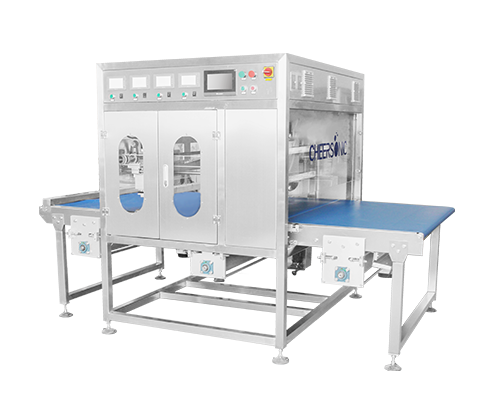
The core advantage of ultrasonic cutting machines stems from their high-frequency vibration cutting method. Unlike traditional mechanical cutting, which relies on the pressure of the blade to separate materials, ultrasonic cutting machines convert electrical energy into high-frequency mechanical vibration through a transducer, causing the cutting blade to vibrate at a frequency of tens of thousands of times per second. This high-frequency vibration can quickly break the binding forces between material molecules at the moment the blade contacts the bread, achieving a “micro-cutting” effect. For thick-cut buttered toast, this cutting method offers particularly significant advantages: Firstly, the high-frequency vibration reduces the contact area between the blade and the bread, lowering friction and effectively preventing bread deformation caused by excessive pressure in traditional cutting, thus preserving the bread’s porous internal structure. Secondly, the instantaneous heat generated by the vibration slightly melts the butter on the bread’s surface, forming a thin lubricating film. This not only reduces crumbs but also makes the cut smoother and more even, enhancing the product’s visual appeal.
In practical applications, precise parameter matching is crucial when using an ultrasonic cutter to cut thick-cut buttered toast. Factors such as the bread’s thickness, texture, and butter content all affect the cutting results; therefore, the vibration frequency, cutting speed, and blade pressure must be adjusted accordingly. Generally, for thick-cut buttered toast with a thickness of 2-4 cm, a vibration frequency of 20-40kHz is suitable. This ensures sufficient cutting force without damaging the bread structure due to excessive vibration. The cutting speed needs to be adjusted according to the production line rhythm, typically controlled at 0.5-2 meters per minute, ensuring the blade has enough time to separate the material. The blade pressure should be as gentle as possible, just enough to cut into the bread, using high-frequency vibration for cutting rather than relying on forceful cutting. Furthermore, the material and shape of the blade need optimization. Using food-grade stainless steel blades avoids rust contamination, while a sharp, curved blade further improves cutting smoothness.
Compared to traditional cutting equipment, ultrasonic cutting machines offer significant production efficiency advantages in the production of thick-cut buttered toast. Traditional cutting methods require frequent blade changes to ensure cutting quality, and a significant amount of time is spent cleaning bread residue and butter adhering to the equipment after cutting, increasing downtime. The high-frequency vibration of ultrasonic cutters reduces material adhesion, and the blade is less prone to residue buildup, significantly reducing cleaning difficulty and frequency, and effectively increasing the continuous operating time of the equipment. Simultaneously, its high cutting precision enables standardized cutting, ensuring that the thickness error of each slice of bread is controlled within millimeters, meeting the consistency requirements of large-scale production. Furthermore, ultrasonic cutting generates low noise and requires no lubricant, meeting hygiene and environmental standards for food processing, further enhancing the safety and standardization of the production process.
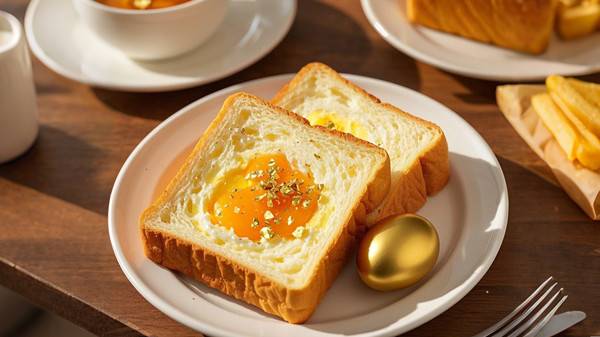
Against the backdrop of consumption upgrading, consumers’ demands for the quality of baked goods are constantly increasing. Thick-cut butter toast with a neat appearance and excellent taste is more competitive in the market. Ultrasonic cutters, with their precise cutting, low damage, and high efficiency, are gradually becoming the mainstream cutting equipment in the baking industry. They not only solve the industry pain point of cutting thick-cut butter toast but are also adaptable to different specifications and recipes of toast products, possessing strong versatility. In the future, with the continuous iteration of ultrasonic technology, cutting equipment will be further optimized in terms of energy saving, consumption reduction, and intelligent control, bringing higher production efficiency to baking enterprises and providing consumers with a better food experience. With the trend towards more refined processing of baked goods, ultrasonic cutting technology will have a broader application prospect, driving the baking industry towards higher quality and greater efficiency.
About Cheersonic
Cheersonic manufactures the leading portioning equipment for bakeries producing fresh and frozen desserts. Since 1998 bakers have used Cheersonic machines to cut, slice and portion cheesecake, pie, layer cake, loaves, butter, cheese, pizza, sandwichs, and more. Cheersonic offers ultrasonic cutting solutions that support start-up bakeries and high production commercial facilities alike. Small standalone machines can be used in manual baking facilities and large inline robotic solutions aid in high speed production.
Cheersonic offers many ultrasonic slicing models, both inline and offline applications, with production speeds of 80 to 1,500 cakes or pies per hour.
Cheersonic’ latest offline introductions include ultrasonic cutting with or without divider inserts between each slice. This improves the quality of the cut and makes for a much better product presentation for the customer. In addition, robotic arm improves the speed, efficiency, and accuracy of the cutting process, producing professional looking products every time.
