
Ultrasonic Mousse Cake Cutter Fails to Cut 40g Silicone Paper: Causes & Solutions
Summary: An ultrasonic mousse cake insert cutter may be running normally but failing to cut 40g silicone paper. The core issue is a mismatch between materials, equipment parameters, and component performance! This article breaks down four key reasons and provides a three-step quick troubleshooting process plus targeted solutions to help baking companies quickly resume production and solve cutting problems.
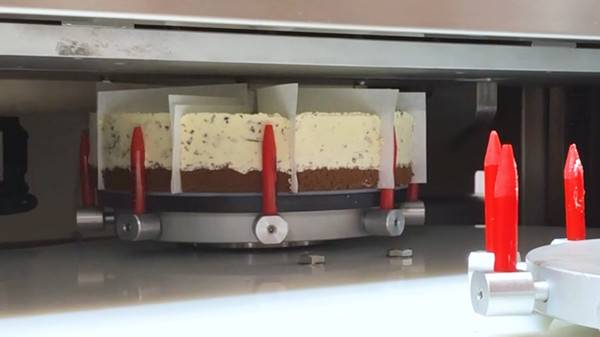
In automated baking production, the ultrasonic mousse cake insert cutter, with its core advantage of “pressureless cutting,” achieves integrated and efficient mousse cake slicing and inserting. It avoids the cake collapse and crumbling problems caused by traditional mechanical cutting and solves the industry pain point of sliced cakes sticking together through automatic inserting, becoming a key piece of equipment for baking companies to improve production efficiency and product quality. However, in actual operation, some customers have reported that when using 40g silicone paper, the machine runs normally but cannot cut the silicone paper. This not only affects production continuity but may also lead to misaligned inserts and damaged cake appearance. This article, combining the principles of ultrasonic cutting, the characteristics of silicone paper, and the equipment’s operating logic, comprehensively analyzes the core causes of this problem and provides practical troubleshooting and solutions to help companies quickly resume normal production.
Core Premise: Clarify Two Key Understandings
Before analyzing the causes, it’s crucial to clarify two fundamental logics to avoid pitfalls in the troubleshooting process:
1. The “Cutting Logic” of the Ultrasonic Paper Insertion Cutter: The core of the equipment relies on a high-frequency vibrating (typically 20-40kHz) blade. The vibration creates tiny gaps, reducing friction and achieving a gentle cut on the cake. Simultaneously, the paper insertion mechanism precisely inserts the silicone paper into the slicing gaps. Its cutting performance is directly related to vibration energy, blade condition, and material properties.
2. Characteristics of 40g Silicone Paper: The basis weight of the silicone paper directly determines its thickness and toughness. 40g is considered a thin silicone paper (common food-grade silicone paper typically weighs 60-100g; higher basis weight means greater thickness and toughness), theoretically making it easier to cut. However, the actual cutting effect is greatly affected by equipment parameters, material quality, and other factors, and may even lead to cutting abnormalities due to its inherent characteristics.
Core Reasons for Incomplete Cutting of 40g Silicone Paper (Ranked by Priority)
Material Issues: 40g Silicone Paper Does Not Meet Equipment Compatibility Requirements
The inherent defects of thin silicone paper are a common cause of cutting failure. In particular, 40g silicone paper, due to its insufficient thickness, is prone to the following problems:
1. Uneven Silicone Paper Thickness and Insufficient Toughness: During the production of 40g silicone paper, if the raw material ratio or calendering process is not up to standard, localized areas may become too thin, too brittle, or have uneven toughness. 1. Inconsistent Cutting Performance: Brittle sections are prone to breakage and residue during cutting, while thin sections may be stretched and deformed by the tension generated by the blade vibration, resulting in what appears to be an uncut surface (actually, the paper has stretched and stuck together).
2. Uneven or Excessive Silicone Oil Coating: The non-stick properties of silicone paper rely on its surface silicone oil coating. Uneven coating or excessive silicone oil in certain areas drastically reduces friction between the blade and the paper, preventing the ultrasonic vibration energy from being effectively transferred to the paper, causing slippage and hindering effective cutting. Insufficient silicone oil causes the paper to stick to the blade and the paper itself, also affecting cutting results.
3. Inconsistent Paper Tension: 40g silicone paper is thin and lightweight. If the roll of silicone paper has uneven tension or curled edges, excessive tension fluctuations after entering the equipment can cause paper misalignment during cutting, preventing the blade from accurately targeting the cutting point and resulting in incomplete cuts. (II) Improper Equipment Parameter Settings: Mismatch Between Ultrasonic Energy and Cutting Parameters
The core of ultrasonic cutting is “energy matching.” If the parameter settings are not compatible with the characteristics of 40g silicone paper, effective cutting cannot be achieved even if the equipment is running normally. This is a key reason that is easily overlooked:
1. Insufficient Ultrasonic Power/Amplitude: Although 40g silicone paper is thin and light, it still requires sufficient vibration energy to cut. If the equipment power and amplitude are set too low, the impact force of the high-frequency vibration of the cutter head is insufficient to break through the molecular bonding force of the paper, resulting in incomplete cutting, manifested as “paper not breaking.” Conversely, if the power is too high, it may cause excessive paper damage and curling, which will affect the paper insertion effect.
2. Mismatch Between Cutting Speed and Feed Rate: When the cutting speed is too fast and the feed rate is too high, the contact time between the cutter head and the silicone paper is too short, and the ultrasonic energy cannot be fully transferred, resulting in incomplete cutting. If the speed is too slow, excessive energy accumulation may cause the paper to scorch or stick, which will also affect the cutting effect. For 40g thin silicone paper, a higher cutting speed and a moderate feed rate are required to avoid insufficient or excessive energy accumulation.
3. Inappropriate cutter height and cutting gap: If the cutter height is too high, the contact pressure with the silicone paper is insufficient, and the vibration energy cannot be effectively applied to the paper. If the height is too low, excessive friction between the cutter and the equipment table will not only wear down the cutter but also disperse the vibration energy, leading to cutting failure. At the same time, an excessively large cutting gap will cause the paper to shift, affecting cutting accuracy and thoroughness.
4. Frequency drift: The vibration frequency of the ultrasonic equipment must be matched with the resonance of the cutter and the material. If the equipment has been used for too long or has not been calibrated regularly, frequency drift (deviating from the set 20-40kHz range) will occur, leading to unstable vibration energy. Even if the power is normal, it will not be able to effectively cut the silicone paper. The frequency error of a high-quality ultrasonic equipment should be controlled within ±0.5kHz; otherwise, cutting abnormalities are likely to occur.
(III) Equipment Component Wear and Improper Maintenance: Performance Degradation of Core Components
The core components of ultrasonic cutting equipment (blade, transducer, amplitude transformer, etc.) are prone to wear under high-frequency vibration. If not regularly maintained, this can lead to decreased cutting performance, making it impossible to cut 40g silicone paper:
1. Blade Wear, Dullness, or Contamination: The blade is the component that directly contacts the silicone paper. Long-term use can cause blade wear and dulling, preventing the formation of a sharp cutting surface. Simultaneously, residues such as cake cream and silicone oil can adhere to the blade surface, affecting the transmission of vibrational energy and resulting in incomplete cutting. Typically, the blade needs to be polished and calibrated every 500 hours of use or every quarter, and should be replaced promptly when severely worn.
2. Transducer Performance Degradation: The transducer is the core component that converts electrical energy into ultrasonic vibration. If used for too long, has poor heat dissipation, or becomes damp, uneven amplitude and unstable frequency can occur, preventing the effective transmission of vibrational energy to the blade. Even if the equipment is operating normally, it will be unable to cut the paper. 1. High-quality transducers must be able to withstand ambient temperatures ranging from -10℃ to 60℃, with amplitude deviation controlled within ±5%.
2. Abnormal linkage between the paper insertion and cutting mechanisms: The cutting and paper insertion actions of an ultrasonic mousse paper inserter and cutter require precise linkage. If the paper feeding speed or guide mechanism position is off, the silicone paper will shift when entering the cutting area, preventing the cutter from cutting accurately. Simultaneously, insufficient pressure in the paper storage bin and wear on the paper feeding rollers will lead to uneven paper feeding, paper tension fluctuations, and affect the cutting effect.
3. Cooling system blockage: Ultrasonic equipment generates a large amount of heat during operation. If the cooling system (fan, vents) is blocked by dust or there is insufficient coolant, the equipment will overheat, affecting the performance of the vibration system, causing frequency drift and amplitude reduction, indirectly leading to incomplete cutting.
4. (IV) Environmental and Operational Factors: Indirectly Affecting Cutting Results
Deviations in environmental conditions and operational procedures, while not directly causing paper breakage, will increase the probability of such problems:
1. Ambient Temperature and Humidity: Excessively high temperatures (above 35℃) will cause the silicone paper to soften and lose its toughness, making it prone to stretching and deformation during cutting; excessive humidity (above 60%) will cause the paper to become damp, altering its surface tension and affecting cutting accuracy; excessively low temperatures may cause the paper to become brittle, resulting in incomplete cutting.
2. Improper Operation: Failure to adjust equipment parameters according to procedures, failure to regularly clean the cutter head and paper feeding mechanism, or failure to calibrate the paper feeding position when changing silicone paper will all lead to cutting abnormalities. Additionally, loosening of the silicone paper roll during installation will also affect the cutting results. III. Practical Troubleshooting and Solutions (From Easy to Difficult, Quick Implementation)
(I) Quick Troubleshooting: 3 Steps to Locate the Root Cause
1. Material Inspection (Easiest to Operate): Replace with a roll of qualified 60g silicone paper (commonly used industry standard), keeping the equipment parameters unchanged. If it can be cut normally, the root cause is the 40g silicone paper itself; if it still cannot be cut, rule out material issues and move on to equipment troubleshooting;
2. Parameter Inspection: Refer to the equipment manual and adjust the parameters for the 40g silicone paper—appropriately increase the ultrasonic power (recommended to adjust to 40%-50% of the equipment’s rated power), amplitude (20-30μm), reduce the cutting speed, fine-tune the feed rate, calibrate the cutter head height (ensuring slight contact between the cutter head and the paper), and simultaneously calibrate the vibration frequency using the equipment’s “automatic tuning function,” observing the cutting effect;
3. Component Inspection: Check the cutter head for wear and residue; clean or replace as needed. Check the transducer and cable connectors for proper function, looseness, and moisture. Inspect the paper feeding rollers and guide mechanism of the paper insertion mechanism to ensure smooth paper feeding and accurate positioning. Clean dust from the cooling system and check the coolant level.
(II) Targeted Solutions
1. Material Level: Prioritize 40g silicone paper with uniform thickness and silicone oil coating, avoiding products that are too brittle, too thin, or have unstable tension. If using 40g silicone paper long-term, communicate with the supplier to customize silicone paper suitable for ultrasonic cutting (optimizing silicone oil coating and paper toughness). Before installing the roll of silicone paper, straighten the edges to ensure consistent tension and reduce tension fluctuations.
2. Parameter Level: Establish a dedicated parameter file for 40g silicone paper—power set to 40%-50% of the equipment’s rated power, amplitude 20-30μm, cutting speed adjusted according to the equipment model (usually 10-15mm/s), feed rate matched to cutting speed; calibrate the vibration frequency regularly (weekly) to ensure no frequency drift.
3. Equipment Maintenance: Establish a daily maintenance plan – clean the cutter head and paper feeding mechanism daily; grind and calibrate the cutter head quarterly, replacing severely worn cutters and paper feeding rollers; check transducer performance and clean the cooling system every six months; check cables and connectors monthly to prevent loosening or damage.
4. Environmental and Operational Aspects: Control the temperature and humidity of the production environment (temperature 20-30℃, humidity 40%-60%); standardize operator procedures; after replacing silicone paper, calibrate the paper feeding position, adjust parameters, and perform a test cut to confirm normal cutting before mass production.
IV. Precautions and Summary
1. Avoid Misconceptions: Some customers believe that “40g silicone paper is thinner and doesn’t require parameter adjustment.” However, thinner paper demands higher ultrasonic energy and parameter precision. Blindly using parameters for thicker paper can easily lead to incomplete cutting. Also, avoid excessively increasing power to prevent paper damage and equipment overload.
2. Long-Term Optimization: If a company needs to use 40g silicone paper long-term, it can contact the equipment manufacturer to customize parameter solutions based on paper characteristics, or make minor modifications to the equipment (such as adjusting the cutter angle and optimizing the paper feeding mechanism tension) to improve cutting stability.
3. Core Summary: The inability of ultrasonic mousse cake insert cutters to cut 40g silicone paper is essentially due to a mismatch between “material characteristics, equipment parameters, and component performance.” When troubleshooting, follow the principle of “from easy to difficult”: first rule out material problems, then adjust parameters, and finally check equipment components to quickly locate and resolve the issue.
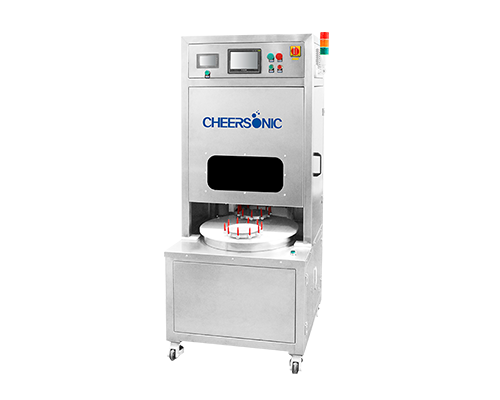
The core advantage of ultrasonic cutting equipment lies in “precise adaptation.” Only when equipment parameters, component status, and material characteristics are perfectly matched can its high efficiency and precision be fully realized, avoiding production failures. If the problem persists after the above checks, it is recommended to contact the equipment manufacturer for professional testing to check for internal equipment malfunctions (such as abnormal vibration systems or control board failures) to ensure long-term stable operation of the equipment and guarantee the continuity of baking production and product quality.
About Cheersonic
Cheersonic manufactures the leading portioning equipment for bakeries producing fresh and frozen desserts. Since 1998 bakers have used Cheersonic machines to cut, slice and portion cheesecake, pie, layer cake, loaves, butter, cheese, pizza, sandwichs, and more. Cheersonic offers ultrasonic cutting solutions that support start-up bakeries and high production commercial facilities alike. Small standalone machines can be used in manual baking facilities and large inline robotic solutions aid in high speed production.
Cheersonic offers many ultrasonic slicing models, both inline and offline applications, with production speeds of 80 to 1,500 cakes or pies per hour.
Cheersonic’ latest offline introductions include ultrasonic cutting with or without divider inserts between each slice. This improves the quality of the cut and makes for a much better product presentation for the customer. In addition, robotic arm improves the speed, efficiency, and accuracy of the cutting process, producing professional looking products every time.
