
Production Process of Plant-based Pet Chew Adhesive
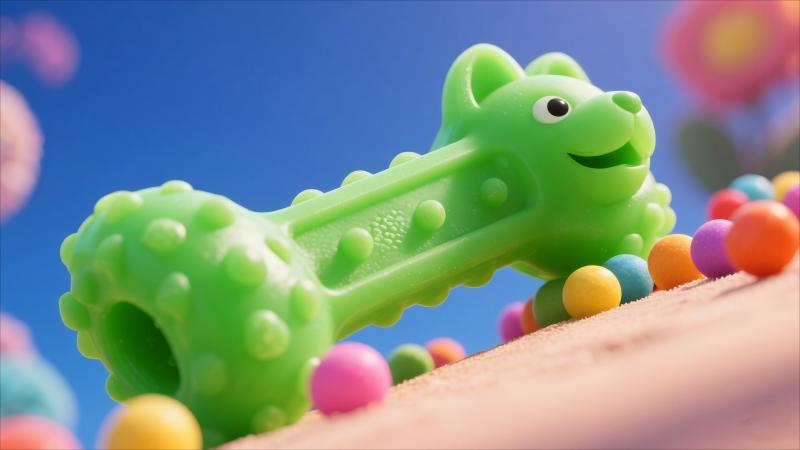
Pet chew gum, as a product that combines oral hygiene and snack functions, can reduce tartar through chewing and friction, and freshen breath with effective ingredients. This type of product is often prepared using screw extrusion technology. Traditional biting glue is mostly made from cowhide and pigskin, and is produced through chemical modification, drying, cutting and other processes, which have problems of high pollution and high cost. The products made from plant protein powder and starch through screw extrusion have the characteristics of low pollution, high digestibility, and excellent mechanical properties, which meet the technical requirements of high-quality chewing gum and have broad development prospects.
During the extrusion process, the combined effect of high temperature, high shear, and high pressure will intensify friction, increase temperature, and refine the material; When the material suddenly enters a normal temperature and pressure state from a high-pressure environment, the internal structure undergoes significant changes, such as starch granule disintegration and gelatinization, protein denaturation and recombination. The structural changes of these components directly affect the tissue characteristics of the bite gel. This article uses plant macromolecules such as soy protein isolate and corn starch as the main raw materials, adds appropriate auxiliary materials, and uses twin-screw extrusion and injection molding processes to prepare plant-based chewing gum. By fixing the proportion of auxiliary materials such as glycerol and calcium carbonate, the influence of the main material ratio and screw extrusion parameters (speed, temperature, time) on product quality is investigated, and the preparation process is optimized.
Experimental Design
1. Preparation of bite adhesive
The preparation process is as follows: material mixing → modulation → moisture balance → twin-screw extrusion → injection molding → cooling → drying → index measurement. The specific formula is: corn starch 70.0g, soy protein isolate 12.3g, calcium carbonate 10.3g, white sugar 3.9g, monoglyceride 1.2g, sodium chloride 1.2g, potassium sorbate 0.3g, calcium propionate 0.8g, vegetable oil 1.3g, glycerol 20.6g, water 23.1g. The operating steps are as follows: mix corn starch and soy protein isolate with calcium carbonate, white sugar, monoglyceride, sodium chloride, potassium sorbate, calcium propionate and other auxiliary materials to obtain 100g of mixed powder; Add vegetable oil, glycerin, and water and stir well. Set aside for later use. After preheating the extruder and injection molding machine to 105 ℃, the mixture is added and extruded at a screw speed of 113r/min for 2 minutes. Then it enters the injection molding machine and is injected under a pressure of 5Mpa for 5 seconds. After molding, it is cooled and dried at 60 ℃ to a moisture content of 10.8% to obtain the finished product.
2. Impact factor test
On the basis of a single factor experiment, soybean protein isolate content (A), extrusion temperature (B), and screw speed (C) were selected as independent variables, with three levels (coded as 1, 0, -1) each. A Box Behnken experimental design was used to conduct response surface analysis. Using product comprehensive evaluation indicators as response values, process parameters were optimized through 17 sets of experiments.
Results
Analysis of variance showed that the content of soy protein isolate and extrusion temperature had a significant impact on the overall product score (P<0.01), and the interaction between the two, as well as the interaction between soy protein isolate and screw speed, were also highly significant; The quadratic terms of extrusion temperature and screw speed showed extremely significant (P<0.01) and significant (P<0.05) effects, respectively.
Specifically, when the content of soy protein isolate increases, the comprehensive score first increases and then decreases, and there is a positive correlation in the low content stage; When the extrusion temperature increases, the score also increases first and then decreases. High temperatures can easily cause starch and protein to coke, affecting product quality. In the interaction between soy protein isolate and screw rotation speed, if the screw rotation speed is too low, the shear force will be insufficient, and if it is too high, the material residence time will be short and the maturation will be insufficient, both of which will reduce the score. The interaction between extrusion temperature and screw speed is manifested as follows: low temperature combined with low speed easily causes material caramelization, while high temperature combined with high speed leads to incomplete maturation, both of which are not conducive to quality improvement.
Through model fitting, the optimal process parameters were obtained: soy protein isolate content of 15%, extrusion temperature of 105 ℃, and screw speed of 113r/min. At this time, the predicted comprehensive score was 0.87.
Conclusion
The established regression model can effectively predict product quality, among which the content of soy protein isolate and extrusion temperature have a significant impact on the comprehensive indicators (P<0.01), while the effect of screw speed is not significant (P>0.05). The degree of influence is in the order of soy protein isolate content>extrusion temperature>screw speed.
The bite adhesive prepared under the optimal process parameters has moderate tensile strength and hardness, good elongation at break, a color close to white, and the best overall performance.
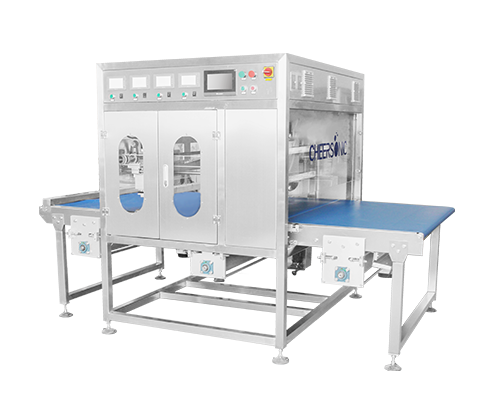
Specifically, the advantages of integrating pet chew glue extrusion molding machines with ultrasonic automatic cutting devices are reflected in the following aspects:
- High cutting quality: The ultrasonic cutting device uses the energy of ultrasonic waves to locally heat and melt the material being cut to achieve cutting. During the cutting process, the pressure on the material is small, and it will not cause pet glue to break or damage the edges. The cutting surface is smooth, non deformed, non curled, non fuzzy, and non threaded. At the same time, it has a fusion and edge sealing effect on the cutting part, which can improve the appearance quality and product grade of pet glue, and echo the quality of the uniform billet produced by the extrusion molding machine.
- High production efficiency: Ultrasonic cutting speed is fast and can work continuously, producing 1200 dog bite gels per hour. It can accurately match the extrusion speed of the pet bite gel extruder, avoiding production stagnation caused by insufficient cutting speed. At the same time, its characteristic of reducing material fragments during the cutting process reduces the downtime for cleaning the production system, allowing the continuous production capacity of the extrusion molding machine to be fully released. In addition, the ultrasonic vibration of the ultrasonic cutting blade makes the frictional resistance particularly small, making it difficult for the cut material to stick to the blade, reducing the efficiency loss caused by cleaning adhesive materials.
- Wide applicability: There are a variety of pet chew adhesive products with different material characteristics, and some products have strong viscosity and elasticity. Ultrasonic cutting has a significant cutting effect on this type of viscous and elastic material. It does not require sharp cutting edges. By using ultrasonic energy to soften and melt the material, the cutting edge of the blade only plays a role in seam positioning, ultrasonic energy output, and material separation. It can adapt well to the characteristics of different formulations and hardness of pet chew adhesive, making the product categories that can be produced by pet chew adhesive extrusion molding machines more diverse.
- Easy equipment maintenance: Traditional cutting devices require sharp cutting tools, which are prone to wear and tear, and require frequent tool replacement, increasing maintenance costs and downtime, indirectly affecting the effective operation time of pet chew glue extrusion molding machines. Ultrasonic cutting does not require sharp blades, avoiding the problem of reduced cutting quality caused by blade wear. The lifespan of the cutting blade is greatly extended, reducing equipment maintenance costs and workload, and ensuring stable production of the extrusion molding machine.
- High degree of automation: The ultrasonic cutting device can easily form an automated production line with the pet bite adhesive extrusion molding machine, achieving high-speed, continuous, unmanned operation from raw material input, extrusion molding to finished product cutting. This not only improves overall production efficiency, but also reduces labor costs and the risk of operational errors, making pet glue production more in line with the development trend of modern manufacturing automation and intelligence.
- Green and environmentally friendly: Compared with traditional mechanical cutting methods, ultrasonic cutting technology reduces environmental pollution and noise generation, does not produce a large amount of rubber shavings and waste, and reduces pollution to the production environment around the extrusion molding machine; At the same time, its noise reduction feature also improves the working environment for operators, meeting the requirements of the pet supplies industry for green production.
This technological integration not only improves the production efficiency of a single pet bite adhesive extrusion molding machine, but also promotes the transformation of the entire pet bite adhesive production industry towards high quality, high efficiency, and low energy consumption, providing core technical support for enterprises in market competition.
About Cheersonic
Cheersonic manufactures the leading portioning equipment for bakeries producing fresh and frozen desserts. Since 1998 bakers have used Cheersonic machines to cut, slice and portion cheesecake, pie, layer cake, loaves, butter, cheese, pizza, sandwichs, and more. Cheersonic offers ultrasonic cutting solutions that support start-up bakeries and high production commercial facilities alike. Small standalone machines can be used in manual baking facilities and large inline robotic solutions aid in high speed production.
Cheersonic offers many ultrasonic slicing models, both inline and offline applications, with production speeds of 80 to 1,500 cakes or pies per hour.
Cheersonic’ latest offline introductions include ultrasonic cutting with or without divider inserts between each slice. This improves the quality of the cut and makes for a much better product presentation for the customer. In addition, robotic arm improves the speed, efficiency, and accuracy of the cutting process, producing professional looking products every time.
Chinese Website: Cheersonic Provides Professional Ultrasonic Cutting Solutions
