
Reducing Sugar in Baked Goods
Healthy Upgrade of Baking Products: Innovative Paths for Scientific Sugar, Salt, and Oil Reduction
Reducing sugar, salt, and oil content has become an important trend in the healthy transformation of baked goods. To achieve reduction while maintaining the original flavor and texture, it is necessary to comprehensively utilize ingredient formula innovation and process technology optimization. The following are currently effective strategies and recommended dosage references:
Sugar reduction strategy: multiple alternatives to maintain sweetness
1. Scientific ratio application of sugar substitutes
– Natural sugar substitutes: such as erythritol (high temperature resistant, zero calorie), steviol glycoside (200-300 times sweeter than sucrose), momordica grosvenorii glycoside, etc. The dosage should be adjusted according to the sweetness level, for example, 1 gram of high potency sweetener can replace approximately 100 grams of sucrose.
– Compound sugar substitution scheme: For example, mixing erythritol with stevia in a 3:1 ratio can improve the odor of single sugar substitutes and enhance taste coordination.
2. Natural ingredients enhance sweetness
Fruit based ingredients, such as banana puree and date palm puree, can be partially replaced with sugar in a 1:1 ratio to reduce sugar usage and increase product moisture.
Flavor and spice assistance: Adding cinnamon, vanilla extract, etc. (dosage of 0.5% -1% of the total flour) can enhance the perception of sweetness.
3. Partial substitution of sugar alcohols
Maltitol, xylitol, and other alternatives can be used to replace 30% -50% of sugar. It is recommended that the total dosage should not exceed 15% of the formula to avoid possible gastrointestinal discomfort.
Salt reduction plan: skillfully using natural ingredients, preserving the salty taste
1. Low sodium salt substitution technology
Replacing 30% -50% sodium chloride with potassium chloride can maintain a salty taste while reducing sodium content.
2. Natural flavor enhancement
Yeast extract: Add 0.5% -1% to enhance the overall flavor using its natural glutamic acid component.
Mushroom and algae extract: such as seaweed powder and shiitake mushroom powder, adding 1% -2% can supplement minerals and freshness, thereby reducing salt consumption.
3. Fermentation and spice combination
– Use garlic powder and onion powder (0.3% -0.5%) to enrich the flavor layers; Using fermentation techniques such as sourdough to enhance the salty and fresh taste through the action of lactic acid bacteria.
Oil Reduction Techniques: The Art of Balancing Texture and Flavor
1. Application of oil substitutes
Vegetable and fruit puree: such as apple puree and pumpkin puree, can replace 30% -50% of oil, and attention should be paid to adjusting the overall moisture content.
High protein dairy products: Greek yogurt and casein can replace 20% -30% of oil and improve product density.
2. Enzyme preparation technology
By using enzyme preparations such as lipase, the dough handling characteristics and finished product moisture can be maintained without significantly adjusting the proportion of other ingredients, while reducing the amount of oil by 30% -50%.
3. High flavor oil enhancement
– Use flavorful oils such as coconut oil and sesame oil (with 1% -2% added) to enhance flavor with minimal usage.
Process optimization and comprehensive adjustment
1. Improvement of fermentation and baking processes
Extending the fermentation time (such as using 12-24 hours of refrigerated fermentation) helps to form complex flavors and reduce dependence on salt and sugar.
Accurately controlling the baking temperature (such as reducing it by 10-15 ℃) can adjust the degree of Maillard reaction and reduce insufficient coloring caused by sugar reduction.
2. Functional ingredient assistance
Dietary fiber: Adding oat fiber and inulin (3% -5%) can improve the texture after reducing oil and bring health benefits.
Emulsifiers such as monoglycerides and phospholipids (0.1% -0.3%) help stabilize the structure and reduce dependence on fats.
Application examples
– Low sugar cake: Use banana puree instead of 50% sugar, erythritol instead of the remaining portion, and Greek yogurt instead of 30% butter.
– Low salt bread: Add 0.8% yeast extract, use low sodium salt (total salt content 1%), and combine with sourdough fermentation process.
– Low oil biscuits: replace 20% butter with peanut butter, add 3% oat fiber to improve texture, and use enzymes to enhance the crisp taste.
Implementation precautions
– The formula needs to be gradually adjusted (recommended to reduce by 10% -20% each time) to avoid texture mutations.
– Salt reducing products should pay attention to anti-corrosion, and oil reducing products should pay attention to water activity control to ensure shelf life.
– Help consumers establish reasonable expectations and guide taste adaptation through clear labeling (such as “reduce sugar by 30%”).
Through the above systematic strategies, it is possible to maintain product flavor and taste while reducing sugar, salt, and oil content, and utilizing natural ingredients and innovative processes. The specific ratio needs to be experimentally optimized based on the product type and process characteristics to achieve innovative baking products that are both healthy and delicious.
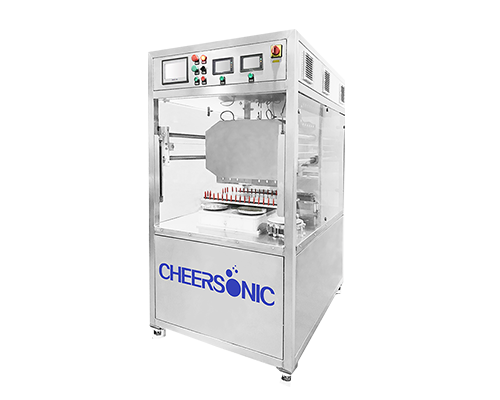
UFM6000 is an automatic food slicing machine with ultrasonic cutting technology, built to slice sticky, frozen, delicate and difficult products, such as sponges cakes, cheesecakes, brownie cakes, pies, quiches, pizzas, pastries, flapjacks and other products with a wide range of temperature from -15 degree Celsius to ambient temperature. And it allows each slice to have a clean quality cutting surface. The machine UFM6000 could slice two round products at the same time and half sheet products out of pan.
- Average speed: about 60-200 products per hour
- Friendly and easy operation
- Reliable and durable ultrasonic machine
- Increased quality and labor saving enhance capacity
- Improved portion quality and consistency
About Cheersonic
Cheersonic manufactures the leading portioning equipment for bakeries producing fresh and frozen desserts. Since 1998 bakers have used Cheersonic machines to cut, slice and portion cheesecake, pie, layer cake, loaves, butter, cheese, pizza, sandwichs, and more. Cheersonic offers ultrasonic cutting solutions that support start-up bakeries and high production commercial facilities alike. Small standalone machines can be used in manual baking facilities and large inline robotic solutions aid in high speed production.
Cheersonic offers many ultrasonic slicing models, both inline and offline applications, with production speeds of 80 to 1,500 cakes or pies per hour.
Cheersonic’ latest offline introductions include ultrasonic cutting with or without divider inserts between each slice. This improves the quality of the cut and makes for a much better product presentation for the customer. In addition, robotic arm improves the speed, efficiency, and accuracy of the cutting process, producing professional looking products every time.
Chinese Website: Cheersonic Provides Professional Ultrasonic Cutting Solutions