
Short Insurance Sandwich Track Observation
Observations on the Short-Shelf-Life Sandwich Market: From Breakfast Blue Ocean to Social Currency: The New Consumption Logic Behind High Premiums
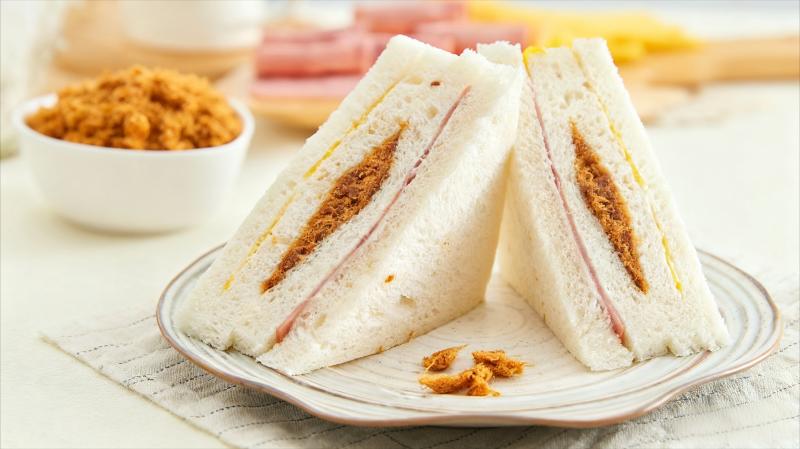
In the fiercely competitive fast food market, a category of simple sandwiches, characterized by their “short shelf life,” “handmade,” and “Japanese style,” has quietly emerged. With prices more than three times higher than traditional options, they have quickly become popular among middle-class consumers, becoming a noteworthy phenomenon in the recent snack food industry.
1. Market Status: High-Priced Products Drive High Repurchase Rates, and Regional Brands Expand Nationwide
Unlike traditional sandwiches, which generally sell for 3-5 yuan on the market, these short-shelf-life sandwiches, while similar in appearance, command a hefty price tag of 13-14 yuan per unit. Surprisingly, the high price tag hasn’t hindered their market performance. Some products have surpassed 5 million yuan in monthly sales on Douyin alone, with particularly impressive repurchase rates, even ranking second on Douyin Mall’s repurchase rankings.
Geographically, these products initially emerged in economically developed regions such as Jiangsu, Zhejiang, and Shanghai, and have gradually expanded nationwide, leveraging well-developed cold chain logistics systems. The consumer portrait shows that nearly 90% of users are female, among which higher-income office workers and sophisticated mothers constitute the core consumer group.
Analysis of the Reasons for the Hot Situation: Targeting the Breakfast Situation to Create Product Differentiation
1. Targeting the Pain Points of a Targeted Audience
The key to the success of this type of product lies in precisely addressing the two major pain points of the target demographic during breakfast: time constraints and a strong focus on ingredient safety. By offering a solution that saves time while ensuring quality, it successfully penetrates the middle-class female market.
2. “Short Shelf Life” Builds Quality Perception
Although the short shelf life limits the product’s shelf life and sales volume, it reinforces its image as “fresh, additive-free, and high-quality,” building consumer trust. Clearly labeled filling ingredients (such as egg wrap, fresh cream, bacon, and other common ingredients) further strengthen consumer confidence in food safety.
3. Value Reshaping and Shifting Price Anchors
By focusing on the breakfast scenario, the product successfully shifted its competitors from traditional sandwiches to the entire breakfast offering. While the price of 13-14 yuan for bread may seem expensive, it is much more reasonable as a complete breakfast, effectively reducing consumers’ price sensitivity.
4. Social Attributes and Identity
The product is endowed with social value beyond just satiety. Consumers shared photos of their “exquisite breakfasts” on social media, gaining a sense of community and identity, thus upgrading the product’s value from functional to social.
5. Leveraging Marketing and Channel Innovation
Leveraging the popularity of a Taiwanese sandwich brand in the Asian market, they entered the market with the concept of a “substitute” and simultaneously implemented a high-density livestreaming campaign featuring influencers on platforms like TikTok, creating economies of scale. Data shows that some products received over 3,000 livestreams within three months, creating a powerful exposure matrix through collaboration with numerous influencers.

Future Development Trend Forecast
1. Category Upgrade and Target Market Expansion
In the future, short-shelf-life sandwich products will continue to penetrate more consumer scenarios. From the current breakfast market, they will expand into afternoon tea, fitness meals, and children’s meals, meeting the needs of different scenarios through innovative fillings and flavors.
2. Regional Brands Expand Nationwide
With the continued development of cold chain logistics technology and continuous cost optimization, short-shelf-life sandwich brands, currently primarily focused on regional markets, will accelerate their national expansion, with first-tier and emerging first-tier cities becoming key market expansion targets.
3. Intensified Competition and Quality Upgrade
With the increasing number of entrants, market competition will become increasingly fierce. This will force brands to continuously upgrade product development, ingredient quality, and packaging design. This will also likely lead to price stratification to reach a wider consumer base.
4. Deep Channel Integration
Online channels will continue to be a key sales platform, but offline channels (particularly convenience stores and high-end supermarkets) will continue to grow in importance, ultimately forming a deeply integrated online and offline sales network.
5. Health Concepts Continue to Strengthen
Consumers’ focus on health will continue to intensify, and concepts such as “clean label,” “organic ingredients,” and “functional additives” may become new avenues for product differentiation.
Conclusion
The rise of short-shelf-life sandwiches is no accident; rather, it’s the result of accurately capturing the changing needs of contemporary consumers. It successfully demonstrates that even in seemingly saturated traditional categories, new market space can be carved out through precise positioning, targeted customer engagement, and reimagined value propositions.
The development of this category also reveals that in the current consumer landscape, the key to product success lies not only in optimizing functional attributes but also in accurately grasping the emotional and social needs of target consumers, creating a product experience that combines practical and social value. As the consumer market continues to mature and segment, the short-shelf-life food market is expected to see more innovative products, worthy of continued market attention.
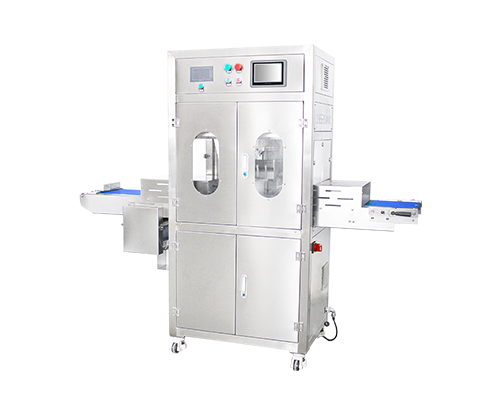
UFM3100S is an intelligent inline slicing machine with ultrasonic cutting technology, specially designed for sandwiches and wraps portioning. Cooperated with a fixture to fix sandwiches, it offers a more precise cut. And it allows each slice to have a clean quality cutting surface. The ultrasonic slicer could operate 900-1100 sandwiches per hour.
- Average speed: about 1800-2200 pieces per hour
- Color touch screen with User friendly interface
- Reliable and durable ultrasonic machine
- Increased quality and labor saving enhance capacity
- Improved portion quality and consistency
About Cheersonic
Cheersonic manufactures the leading portioning equipment for bakeries producing fresh and frozen desserts. Since 1998 bakers have used Cheersonic machines to cut, slice and portion cheesecake, pie, layer cake, loaves, butter, cheese, pizza, sandwichs, and more. Cheersonic offers ultrasonic cutting solutions that support start-up bakeries and high production commercial facilities alike. Small standalone machines can be used in manual baking facilities and large inline robotic solutions aid in high speed production.
Cheersonic offers many ultrasonic slicing models, both inline and offline applications, with production speeds of 80 to 1,500 cakes or pies per hour.
Cheersonic’ latest offline introductions include ultrasonic cutting with or without divider inserts between each slice. This improves the quality of the cut and makes for a much better product presentation for the customer. In addition, robotic arm improves the speed, efficiency, and accuracy of the cutting process, producing professional looking products every time.
Chinese Website: Cheersonic Provides Professional Ultrasonic Cutting Solutions