
Ultrasonic Bread Slicing
Ultrasonic Bread Slicing – Cutting Bread slicing – Cheersonic
1. Principle
High-frequency vibration cutting: Ultrasonic bread cutting utilizes an ultrasonic generator to produce high-frequency electrical signals. These signals are converted into mechanical energy by a transducer, causing the cutting blade to vibrate at a high frequency (typically between 20-40kHz). When the blade contacts the bread, this high-frequency vibration quickly cuts the bread’s fibrous structure. The interior of bread is composed of numerous gluten networks and pores; the high-frequency vibration disrupts the connections between these structures, preventing the bread from being compressed and deformed during cutting, resulting in a cleaner cut.
Reduced friction and adhesion: Ultrasonic vibration also reduces friction between the blade and the bread. During cutting, the bread doesn’t stick to the blade as easily as when using a regular knife. This is because the high-frequency vibration constantly changes the contact state between the bread and the blade, suppressing adhesive interactions and resulting in smoother cutting.
2. Advantages
High cutting quality:
Smooth cut surface: Because ultrasonic cutting is achieved through high-frequency vibration, the blade doesn’t excessively compress the bread during cutting, resulting in a very smooth cut surface. This is crucial for occasions where the internal structure of bread needs to be displayed (such as baking product demonstrations and bread-making tutorials), and it also facilitates subsequent processing such as spreading sauces.
Good Shape Preservation: Whether cutting into thin slices or specific shapes, ultrasonic cutting maintains the bread’s shape well. For some intricately designed breads (such as artistic breads and fancy breads), this precise cutting avoids damaging the bread’s appearance and preserves its aesthetic appeal.
High Cutting Efficiency:
Fast Cutting: Compared to traditional cutting methods, the high-frequency vibration of ultrasound allows the blade to quickly cut into the bread and complete the cutting action. In commercial environments such as bakeries, this significantly increases the speed of bread cutting, meeting customers’ needs for quick purchases. The efficiency improvement is even more pronounced when processing large quantities of bread.
Strong Continuous Cutting Capability: Ultrasonic cutting blades can maintain a highly efficient cutting state for extended periods, with less likelihood of blades sticking to bread or a decrease in cutting quality. This allows for consistent cutting quality and speed during continuous bread cutting, reducing time wasted on cleaning blades or adjusting cutting methods.
Advantages in hygiene and preservation:
Reduced crumb production: During ultrasonic cutting, the bread is cut neatly, resulting in relatively fewer crumbs. This not only keeps the cutting area clean but also reduces the impact of crumbs on the bread’s freshness. Crumbs tend to remain on the bread surface during traditional cutting, accelerating drying and spoilage.
Avoiding bread contamination: Unlike traditional blades, ultrasonic cutters do not produce metal shavings due to wear during the cutting process, thus preventing metal shavings from contaminating the bread and ensuring food safety. Furthermore, the smooth cut surface allows for more even application of sauces and other spreads, reducing the risk of microbial growth due to uneven application.
3. Application Scenarios
Commercial baking sector:
Bakeries and supermarket bread counters: In these locations, there is a need for fast and efficient cutting of various breads, such as staple breads and sliced bread, to meet customer demand. Ultrasonic cutting ensures the quality of bread cutting, making the bread more appealing while improving service efficiency.
Baking and food processing plants: For mass-produced bread products such as sandwich bread and toast, ultrasonic cutting can be used to cut bread into uniform sizes and shapes, facilitating packaging and sales. Furthermore, it produces fewer breadcrumbs during the cutting process, helping to maintain a clean production environment.
Food and beverage and hospitality industry: Restaurants and buffets: When serving bread, ultrasonic cutting can cut bread into aesthetically pleasing shapes, enhancing the quality of the food service. For specialty or artisanal breads, precise cutting can better showcase the bread’s unique characteristics.
Hotel breakfast service: It can quickly cut bread into appropriate sizes for guest convenience. At the same time, reducing breadcrumb production also helps maintain the cleanliness of the breakfast area.
About Cheersonic
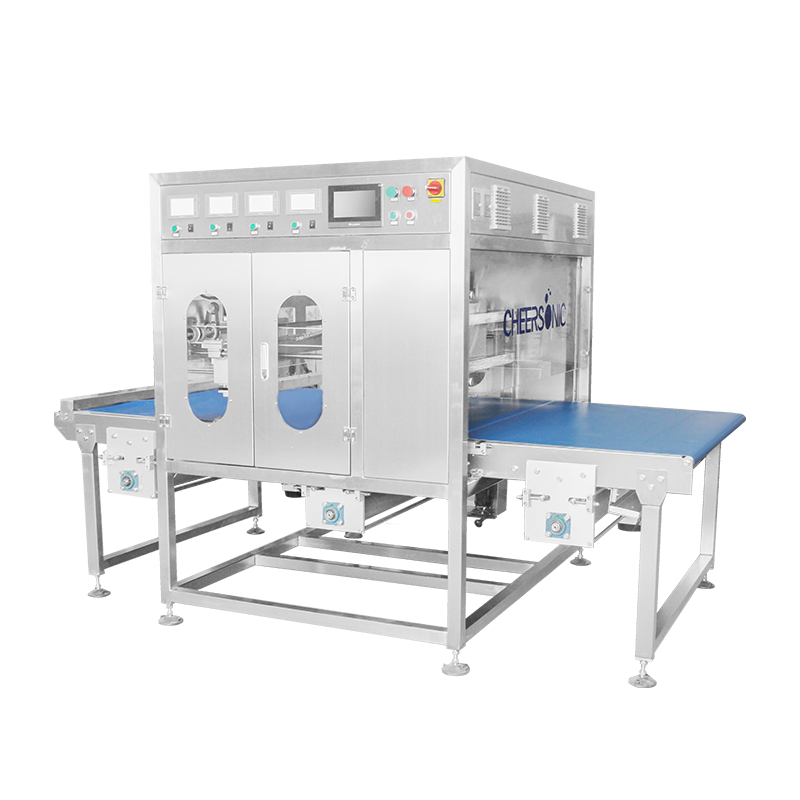
Cheersonic manufactures the leading portioning equipment for bakeries producing fresh and frozen desserts. Since 1998 bakers have used Cheersonic machines to cut, slice and portion cheesecake, pie, layer cake, loaves, butter, cheese, pizza, sandwichs, and more. Cheersonic offers ultrasonic cutting solutions that support start-up bakeries and high production commercial facilities alike. Small standalone machines can be used in manual baking facilities and large inline robotic solutions aid in high speed production.
Cheersonic offers many ultrasonic slicing models, both inline and offline applications, with production speeds of 80 to 1,500 cakes or pies per hour.
Cheersonic’ latest offline introductions include ultrasonic cutting with or without divider inserts between each slice. This improves the quality of the cut and makes for a much better product presentation for the customer. In addition, robotic arm improves the speed, efficiency, and accuracy of the cutting process, producing professional looking products every time.
Chinese Website: Cheersonic Provides Professional Ultrasonic Cutting Solutions