
Ultrasonic Cutting for Pet Cheese Chunks
Ultrasonic cutting machines have demonstrated unique technological advantages in the processing of pet cheese blocks, especially in response to the characteristics of “soft, high viscosity, and fragile (or easily deformed)” nature of pet cheese blocks, which can effectively solve the quality and efficiency pain points of traditional cutting. The following analysis focuses on adaptability, core advantages, operational points, and application value:
Adaptation of ultrasonic cutting principle to the characteristics of pet cheese chunks
Ultrasonic cutting achieves material “vibration separation” through high-frequency vibration (20-40kHz) blades, and its core is to use high-frequency mechanical energy to instantly break the internal connections of the material, rather than the traditional cutting method of “squeezing and tearing”. This characteristic highly matches the physical properties of pet cheese chunks:
Pet cheese chunks are usually based on cheese (such as Cheddar cheese, whey cheese), with added nutrients such as whey protein, probiotics, calcium powder, etc. After mixing and molding (such as pressing or injection molding), they form products with soft and elastic texture (or semi hard), high milk fat content (5% -20%), strong viscosity (containing colloidal components such as whey protein), and loose structure (some products contain bubbles or pores). Traditional cutting methods, such as knife cutting and mold stamping, are prone to deformation (such as edge collapse), fragmentation (hard cheese), sticking (soft high fat cheese), or rough cross-sections due to compression, while the “low-pressure vibration separation” mode of ultrasonic cutting can minimize damage to the structure of cheese blocks and adapt to their soft, sticky, and vulnerable characteristics.
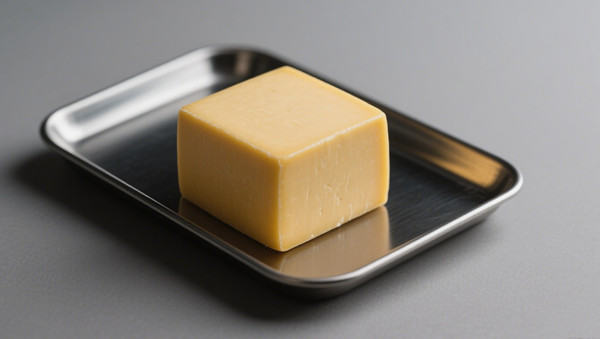
The core advantages of ultrasonic cutting in pet cheese chunks
1. The cutting surface should be flat and smooth to avoid fragmentation and deformation
Pet cheese chunks have a dual structure of elasticity and brittleness due to the presence of milk fat and protein: soft cheese chunks (such as products with a high whey content) are prone to deformation due to compression, and traditional knife cutting may result in edge collapse or “brushed” residue; Hard cheese blocks (such as low moisture cheese) are prone to breakage due to uneven cutting force, resulting in fragments on the cross section.
The high-frequency vibration of the ultrasonic blade can instantly separate the cheese tissue, and the cutting force is concentrated at the blade contact point, with minimal compression on the surrounding materials (pressure is only 1/5-1/10 of traditional cutting). After cutting, the cross-section is flat without burrs, and there is no edge collapse (soft cheese) or fragmentation (hard cheese). Experiments have shown that for pet cheese pieces with a diameter of 10-20mm, the cross-sectional flatness of ultrasonic cutting can reach over 95%, significantly better than traditional knife cutting (about 60% -70%).
2. Strong anti sticking, reducing residual milk fat and cleaning burden
The milk fat and whey protein in pet cheese chunks are typical “high viscosity components”. In traditional cutting, when the blade comes into contact with the cheese, the milk fat easily adheres to the blade, resulting in residual cheese debris on the blade after cutting. This not only pollutes subsequent products, but also requires frequent shutdown and blade cleaning (cleaning may be necessary every 100-200 chunks cut).
The high-frequency vibration (20-40kHz) of the ultrasonic blade produces a “micro bounce” effect, and the actual contact time between the blade and the cheese is extremely short (millisecond level). At the same time, the vibration can shake off the residual milk fat and debris on the surface, greatly reducing the probability of sticking to the blade. Data shows that compared to traditional knife cutting, the sticking frequency of ultrasonic cutting can be reduced by more than 70%, and the downtime for cleaning can be reduced by 50%, significantly improving production continuity.
3. Suitable for diverse cheese textures, with stronger cutting stability
Pet cheese chunks vary greatly in texture depending on the formula:
– Soft cheese chunks (high milk fat content, moisture ≥ 40%): with a texture similar to pudding, traditional cutting can easily lead to shape collapse and blurred edges due to squeezing;
– Semi hard cheese chunks (20% -40% milk fat, thickened with starch/fiber): The texture is slightly hard but still sticky, and traditional cutting is prone to “pulling and deformation”, with irregular cross-sections;
– Granular cheese chunks (with added chicken and vegetable pieces): Traditional cutting can easily cause “jamming” due to particle obstruction, resulting in particle detachment or rough edges.

The high-frequency vibration of ultrasonic cutting can quickly separate the connection between the cheese matrix and particles, and the low-pressure characteristics do not squeeze soft cheese or pull semi hard cheese. Regardless of the texture, it can maintain stable cutting and adapt to diverse formula requirements.
4. Low temperature cutting to preserve nutrition and flavor activity
The core nutrients of pet cheese chunks, such as probiotics, whey protein, and fat soluble vitamins, are sensitive to high temperatures. Traditional cutting methods, such as high-speed knife cutting, may cause local temperature increases (≥ 10 ℃), disrupt probiotic activity, or cause slight oxidation of milk fat (resulting in odor).
Ultrasonic cutting is mainly based on mechanical energy vibration, and the temperature rise in the cutting area is usually ≤ 2 ℃, with almost no thermal damage. It can fully preserve the nutritional activity of the cheese block (such as increasing the survival rate of probiotics by more than 20%) and the original milk flavor, avoiding taste deterioration caused by high temperature (such as hardening and astringency).
Key points of operation and optimization suggestions
1. Raw material pretreatment: control temperature and hardness
The hardness of cheese chunks varies significantly with temperature, directly affecting the cutting effect:
– Soft cheese chunks are recommended to be refrigerated (4-8 ℃) before cutting, using low temperature to increase hardness (reduce deformation), while reducing milk fat fluidity (reduce knife sticking);
Semi hard cheese pieces can be cut at room temperature (20-25 ℃) to avoid slight breakage of the cutting edge caused by excessive hardening at low temperatures.
If the cheese block contains easily melting ingredients (such as added vegetable oil), the ambient temperature should be controlled to be ≤ 25 ℃ to prevent the surface oil from melting and aggravating the sticking of the knife during the cutting process.
2. Equipment parameter debugging: precise matching of frequency, speed, and pressure
The core parameters need to be adjusted according to the texture of the cheese block to ensure a balance between cutting efficiency and quality:
Vibration frequency: It is recommended to use 25-30kHz for soft and high viscosity cheese pieces (high frequency reduces contact time and prevents sticking); It is recommended to use 20-25kHz (low frequency to enhance cutting force and separate particles) for semi hard cheese chunks containing particles.
– Cutting speed: For small-sized cheese pieces with a thickness of ≤ 10mm (such as pet training snacks), it is recommended to have a cutting speed of 5-8m/min; A recommended thickness of 10-20mm is 3-5m/min, as excessive speed can lead to incomplete cutting (resulting in “wire drawing” residue).
Blade pressure: Based on the principle of “breaking with a light touch”, the pressure of soft cheese blocks should be ≤ 0.1MPa (to avoid deformation caused by squeezing); Semi hard cheese chunks 0.1-0.2MPa (ensure thorough cutting).
3. Blade selection and anti sticking optimization
Blade material: Made of food grade 304 stainless steel, the blade edge is treated with a “nano anti sticking coating” (such as PTFE modified coating) to further reduce milk fat adhesion;
– Blade angle: Soft cheese chunks are suitable for sharp edged blades of 15 ° -20 ° (reducing contact area and preventing sticking); Semi hard cheese chunks are suitable for 20 ° -30 ° obtuse angle blades (enhancing durability and avoiding chipping).
– Regularly check blade wear: When there is slight roughness on the cutting edge, it is necessary to polish the blade edge in a timely manner (it is recommended to check once every 500kg of product cut) to ensure that the vibration energy is concentrated.
4. Hygiene control: Adapt to high cleanliness standards for pet food
Pet food has strict requirements for microbial control, and equipment must meet the following hygiene design:
The cutting area is physically isolated from vibration generators, motors, and other components, using a fully enclosed waterproof structure to prevent cheese debris and cream from seeping into the interior of the equipment;
The contact parts such as blades and conveyor belts should be detachable and cleaned daily with 75% alcohol or food grade alkaline cleaner. High temperature steam disinfection (121 ℃, 30 minutes) should be performed weekly to prevent bacterial growth caused by residual milk fat.
Summarize
The ultrasonic cutting machine precisely solves the core pain points of “sticking knife, deformation, fragmentation, and nutrient loss” in pet cheese block cutting through its “low-pressure high-frequency vibration” characteristic, especially in improving the appearance regularity of small-sized snacks (such as cross-sectional smoothness and size consistency), reducing cleaning costs, and retaining nutritional activity. It has significant advantages. For enterprises pursuing high-quality and multi specification pet cheese snack production, ultrasonic cutting is an ideal technology choice to achieve “quality upgrade+efficiency improvement”, which can be widely adapted to the processing scenarios of soft, semi-rigid, and granular pet cheese blocks.
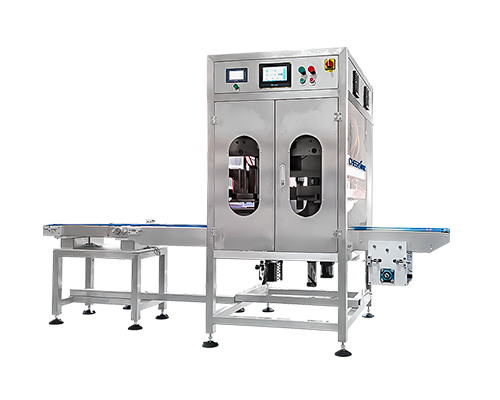
UFM3100W is an automatic slicer that uses ultrasonic cutting technology. It can be cut into circles and cut into cheese with an ideal fixed weight. This intelligent machine combines an integrated scale for pre weighing to cut cheese into the desired effect, maximizing yield and reducing waste. It can not only be produced independently, but also integrated into existing production lines. This machine has been certified by CE and FDA.
About Cheersonic
Cheersonic manufactures the leading portioning equipment for bakeries producing fresh and frozen desserts. Since 1998 bakers have used Cheersonic machines to cut, slice and portion cheesecake, pie, layer cake, loaves, butter, cheese, pizza, sandwichs, and more. Cheersonic offers ultrasonic cutting solutions that support start-up bakeries and high production commercial facilities alike. Small standalone machines can be used in manual baking facilities and large inline robotic solutions aid in high speed production.
Cheersonic offers many ultrasonic slicing models, both inline and offline applications, with production speeds of 80 to 1,500 cakes or pies per hour.
Cheersonic’ latest offline introductions include ultrasonic cutting with or without divider inserts between each slice. This improves the quality of the cut and makes for a much better product presentation for the customer. In addition, robotic arm improves the speed, efficiency, and accuracy of the cutting process, producing professional looking products every time.
Chinese Website: Cheersonic Provides Professional Ultrasonic Cutting Solutions
