
Ultrasonic Cutting Machine for Cutting Pet Molars
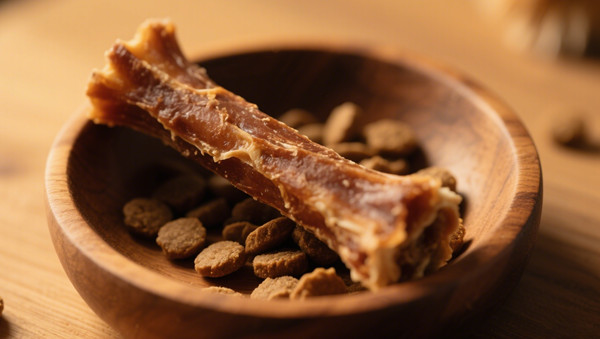
Ultrasonic cutting machines have shown significant technical adaptability in the processing of pet grinding rods, especially for the characteristics of “high hardness, toughness, and multi material composite” of grinding rods, which can effectively solve the quality defects and efficiency bottlenecks of traditional cutting. The following analysis will focus on feature adaptation, core advantages, operational points, and application value:
Adaptation of ultrasonic cutting principle to the characteristics of pet molars
Ultrasonic cutting achieves “vibration separation” through high-frequency vibration (20-40kHz) blades, and its core is to use high-frequency mechanical energy to instantly break the internal connections of materials, rather than the “extrusion tearing” of traditional cutting. This characteristic highly matches the physical properties of pet molars:
Pet molars are functional snacks designed to meet the biting needs of pets, which can be divided into three categories based on material:
– Plant based grinding rod: with starch (corn, rice), cellulose (beet pulp, wood fiber), and plant protein (soy protein) as the core, it is extruded at high temperature to form a hard texture (hardness ≥ 60 Shore D), high density, and fiber skeleton;
Animal protein based grinding rod: made by pressing/wrapping cowhide, chicken jerky, fish skin, etc., with a tough texture (elongation at break ≥ 30%), layered or interlaced fibers, and some products contain hard particles such as meat tendons and cartilage;
– Composite base grinding rod: a mixture of plant-based and animal protein (such as starch, meat powder, and whey protein), which may add dental cleaning factors (such as calcium carbonate) and minerals, forming complex structures such as “hard outer layer+soft inner layer” and “homogeneous hard ground+dispersed particles”.
Traditional cutting methods, such as sawing, grinding wheel cutting, and stamping, are prone to problems such as “edge breakage (hard surface), tensile deformation (tough material), rough cross-section (including fibers), and rapid tool wear” when facing high hardness/toughness materials. However, the “low-pressure high-frequency vibration” of ultrasonic cutting can accurately separate materials and adapt to the hard, tough, and miscellaneous characteristics of grinding rods.
The core advantages of ultrasonic cutting in pet molars
1. The cutting surface is smooth without any broken edges, improving product safety
The core function of pet molars is to “chew and wear”, but cracked or rough edges may cause scratches on the mouth of pets (especially puppies/small dogs) when they chew. When traditional cutting of hard ground grinding rods (such as plant-based extrusion rods), cracks or debris are prone to occur in the cross-section due to concentrated tool pressure (with a fracture rate of over 30%); When cutting tough animal protein sticks (such as cowhide rolls), pulling and pulling can cause edge fuzzing and fiber exposure (burr rate ≥ 40%).
The high-frequency vibration (20-30kHz) of the ultrasonic blade can instantly cut through the material fibers and skeleton, and the cutting force is evenly distributed at the blade contact point, without squeezing or impacting the surrounding materials. The edge breakage rate of the hard grinding rod can be reduced to less than 5%, and the burr rate of the tough material is controlled within 10%. The cross section is flat and smooth, avoiding the risk of pet oral injury.
2. Low pressure cutting to avoid stretching and deformation of tough materials
Animal protein based grinding rods (such as cowhide compression rods and chicken jerky wrapping rods) have strong toughness due to their high content of collagen and fibers. Traditional cutting methods (such as knife cutting) require significant pressure, which can easily cause the material to be pulled and stretched, resulting in cross-sectional skewness (such as circular rods becoming elliptical), length deviation (± 2mm or more), or extrusion deformation of the inner soft part.
Ultrasonic cutting replaces “extrusion tearing” with “vibration separation”, and the pressure of the cutting tool on the material is only 1/3-1/5 of traditional cutting. During the cutting process, the grinding rod has almost no displacement or deformation, especially for “long tooth grinding rods” (such as 10-20cm long), the length consistency (deviation ≤ 0.5mm) and shape regularity are significantly improved, which is suitable for the standardized production needs of pet snacks.
3. Efficient cutting of fibers and particles, suitable for composite structures
Composite grinding rods often contain fibers (such as wood fibers and meat fibers) and hard particles (such as calcium carbonate and cartilage fragments). Traditional cutting methods often result in cross-sectional wire drawing due to uncut fibers (such as exposed plant fibers), and particles are prone to detachment from the matrix due to compression (such as tooth cleaning factor particles falling off), affecting product integrity.
The high-frequency vibration of ultrasonic blades can quickly cut fibers (the higher the vibration frequency, the stronger the cutting efficiency), while the low-pressure characteristics prevent the connection between particles and matrix from being crushed and damaged. Whether it is a homogeneous hard rod, layered rod, or particle containing rod, it can achieve “thorough fiber cutting, no particle detachment”, no wire drawing or voids in the cross section, and maintain the integrity of the product structure.
4. Reduced tool wear rate and extended service life
When traditional cutting of high hardness grinding rods (such as plant-based extrusion rods), the cutting tools (such as steel saws, alloy knives) are prone to wear and passivation due to continuous friction and impact (replacement or polishing may be required for every 1000 pieces cut), resulting in decreased cutting efficiency and deterioration of cross-sectional quality.
In ultrasonic cutting, the blade “micro impacts” the material through high-frequency vibration, rather than continuous hard friction. The actual contact pressure between the blade and the material is small, and the wear rate is only 1/5-1/8 of traditional cutting. Experimental data shows that when cutting plant-based grinding rods with a hardness of 60-80 Shore D, the continuous service life of ultrasonic blades can reach 5000-8000, significantly reducing tool replacement frequency and production costs.
5. Low temperature cutting to preserve the activity of functional ingredients
Some high-end grinding rods are added with thermosensitive functional ingredients (such as probiotics, enzyme preparations, Omega-3 fatty acids). Traditional cutting methods (such as friction heating during high-speed sawing) may cause local temperature increase (≥ 15 ℃), damage ingredient activity (such as probiotic inactivation rate ≥ 30%), or trigger lipid oxidation (meat fat deterioration of animal protein based rods).
Ultrasonic cutting is mainly based on mechanical energy vibration, and the temperature rise in the cutting area is usually ≤ 3 ℃, with almost no thermal damage. It can fully retain the activity of functional ingredients (such as increasing the survival rate of probiotics by more than 25%) and the original hardness of the grinding rod (to avoid a decrease in wear resistance due to high temperature softening).
About Cheersonic
Cheersonic manufactures the leading portioning equipment for bakeries producing fresh and frozen desserts. Since 1998 bakers have used Cheersonic machines to cut, slice and portion cheesecake, pie, layer cake, loaves, butter, cheese, pizza, sandwichs, and more. Cheersonic offers ultrasonic cutting solutions that support start-up bakeries and high production commercial facilities alike. Small standalone machines can be used in manual baking facilities and large inline robotic solutions aid in high speed production.
Cheersonic offers many ultrasonic slicing models, both inline and offline applications, with production speeds of 80 to 1,500 cakes or pies per hour.
Cheersonic’ latest offline introductions include ultrasonic cutting with or without divider inserts between each slice. This improves the quality of the cut and makes for a much better product presentation for the customer. In addition, robotic arm improves the speed, efficiency, and accuracy of the cutting process, producing professional looking products every time.
Chinese Website: Cheersonic Provides Professional Ultrasonic Cutting Solutions